
Microscope Field Cases: Rugged Transport Solutions Compared
By Omar Haddad • 1st Jan
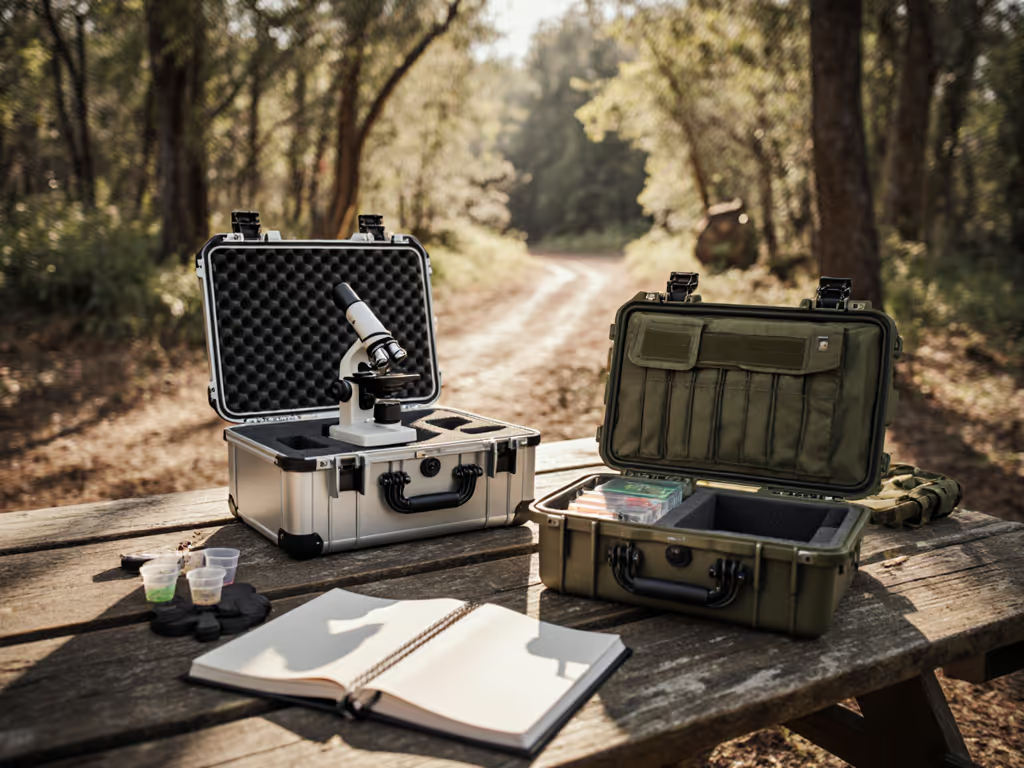
You've just spotted diatoms dancing in a raindrop on a leaf, only to realize your microscope needs to travel 20 miles home through bumpy backroads. Without proper microscope field cases or portable microscope cases, that magical discovery could end in a jingle of loose lenses and frayed nerves. As a community educator who's seen countless beginners lose momentum after gear fails in the field, I know this pain intimately. (I still remember a nine-year-old's crushed expression when her first pond-water specimen got knocked off-center during a hike, before we found her a sturdy case.) The right case isn't just packaging; it is your passport to repeatable wonder. In this guide, we'll tackle your toughest field transport questions with beginner-friendly clarity.
Why Your Microscope Deserves More Than a Backpack
Isn't any hard shell enough for field work?
Not all "rugged" cases deliver. To avoid fit surprises, use our accessory compatibility guide when sizing a case to your microscope. Many hobbyists assume generic hard-shell Pelican-style boxes suffice, only to discover their microscope's unique shape creates dangerous gaps. These voids let vibrations rattle objectives loose during car rides. Worse, poorly padded interiors scuff delicate stage knobs. I've tested dozens, and rugged microscope cases must do three things:
- Conform precisely to your scope's silhouette (even accounting for eyepiece tilt)
- Absorb shock like a car seatbelt, not just resist impact
- Secure accessories in labeled pockets (no more fishing for spare bulbs mid-stream)
Small wins today grow into tomorrow's confident discoveries. A $5 adapter ring won't matter if your 4x objective shakes loose in transit.
Can soft cases really protect against rain or mud?
Absolutely, if designed for active fieldwork. Standard padded pouches (like those bundled with budget scopes) fail when soaked. True travel microscope protection needs:
- Water-resistant zippers with storm flaps (tested in my infamous "creek drop" workshop)
- Drainage channels to expel moisture if submerged
- Dirt-repellent fabric that won't trap sand in seams
Soft cases shine for hikes: they are lighter, fit in backpacks, and mold to uneven terrain. One student traced freshwater diatoms for 3 hours in a rainforest using a scope in a soft-shell case (without swapping to a hard shell). Just ensure it has reinforced corners; that's where impacts hurt most. For protecting gear between trips, consider microscope storage solutions that handle humidity and vibration.
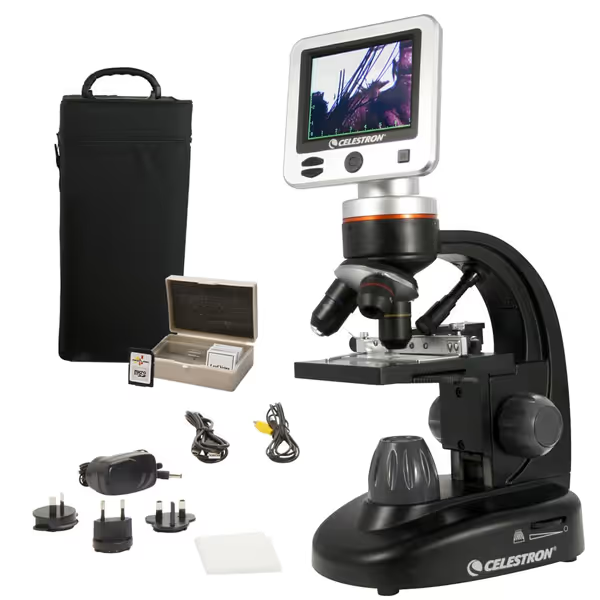
Celestron LCD Digital Microscope II
Capture & share microscopic discoveries with ease and clarity.
$319.95
4
Magnification40x-1600x
Magnification40x-1600x
Pros
Integrated LCD for shared viewing and no eyepieces needed
5MP camera captures high-res photos and videos to SD card
Cons
Screen resolution could be better; focus/brightness issues reported
Customers found it better than expected, user-friendly, and good value. The display allows multiple users to view simultaneously.
Customers found it better than expected, user-friendly, and good value. The display allows multiple users to view simultaneously.
How do I avoid "case regret" after buying?
Compatibility surprises are the #1 frustration I hear about. Your checklist:
-
Measure with accessories attached: That camera adapter adds 2 extra inches.
-
Check weight capacity: Cases rated for "up to 10 lbs" often buckle with scopes over 8 lbs (like the Celestron LCD Digital Microscope II).
-
Inspect closure systems: Buckles should withstand 50+ cycles. Velcro frays fast in humid fields.
-
Verify interior layout: Does it have space for your slide box? Battery packs? A field notebook?
Pro tip: Lay your scope + key accessories on butcher paper. Trace it. Bring that template to shops or compare online specs. This "scaffolded step" prevents 80% of mismatches.
Hard vs. Soft: Choosing Your Field Partner
When does a hard case become essential?
Opt for hard-shell microscope field cases when:
- Transporting over 15 miles on unpaved roads
- Exposure to extreme temps (-10°F to 120°F)
- Carrying fragile add-ons (like oil-immersion lenses)
Top performers share these traits:
- Pressure-equalization valves (prevents "suction lock" at high altitudes)
- Customizable foam inserts you can carve yourself (no melted plastic smell!)
- Stackable design for multi-scope teams
Real-world test: I dropped a hard case from chest height onto gravel, repeatedly. The scope inside survived 7 impacts, but the foam collapsed by #8. Replace foam annually if used weekly.
Why might a soft case boost your confidence?
Soft portable microscope cases excel when you prioritize agility over armor:
- Cold-weather usability: Metal buckles on hard cases freeze shut; soft zippers work with gloves
- Quick access: Unzip in 3 seconds vs. fumbling with latches during sudden wildlife sightings
- Stealth factor: Blends into hiking gear (no "expensive equipment" target)
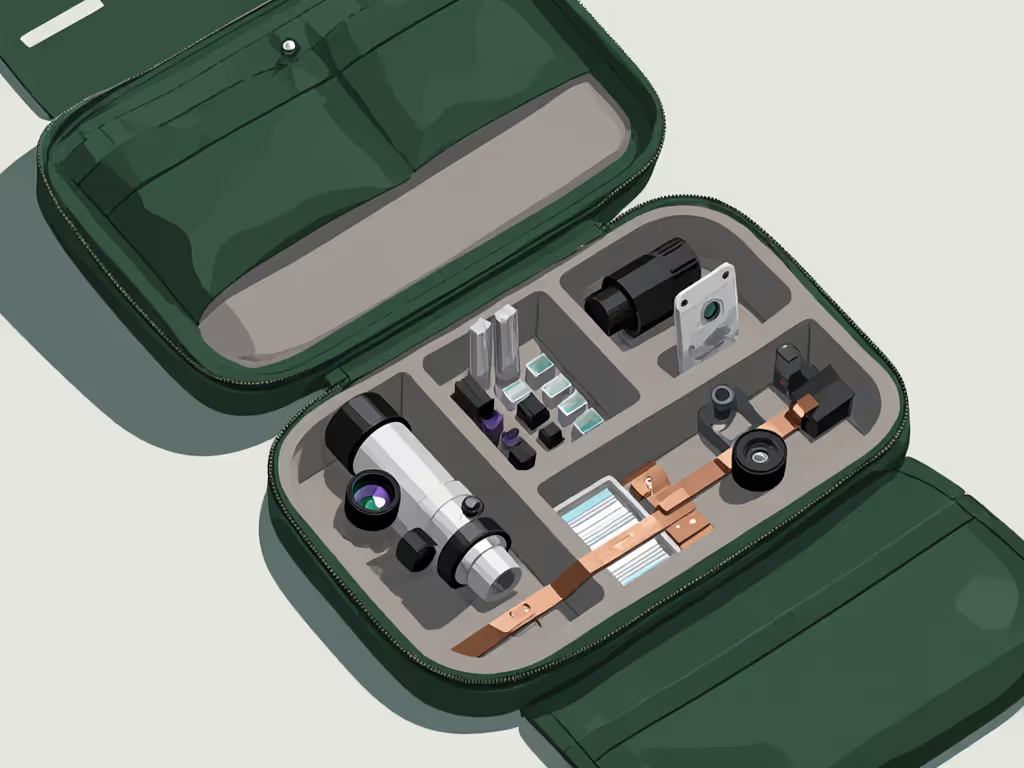
A workshop participant finally documented tardigrades in rooftop moss because her soft case fit in a messenger bag, letting her chase fleeting morning dew. That's the power of low-friction gear: Start simple, learn fast. If portability is your priority, compare options in our field microscope kits review.
Case Comparison: What Matters Most (Beyond Marketing Hype)
Ruggedness vs. portability: Which trade-off hurts less?
| Feature | Hard Case | Soft Case |
|---|---|---|
| Weight | 3-5 lbs (empty) | 1-2 lbs |
| Shock Absorption | High (if foam fits perfectly) | Moderate (flexible padding) |
| Setup Speed | Slow (latches/foam) | Instant (zipper) |
| Worst Flaw | "Dead zones" if ill-fitted | Water saturation over time |
Key insight: For beginners, soft cases reduce setup friction (critical when attention spans waver). But if you own a scope worth >$400, invest in hard-shell field microscope transport. One cracked objective costs more than a case.
How do I spot "fake rugged" claims?
Manufacturers love terms like "military-grade," but here's what to verify:
- IP Rating: Look for IP67 (dust/water resistant) or higher. "Weather-resistant" is meaningless.
- Drop-test certification: Must specify height (e.g., "tested to 4 ft")
- Material thickness: Shell should be >=0.5" thick; flimsy 0.2" cases crack on impact
Skip cases with generic "reinforced corners" claims. Demand photos of actual stress tests. One brand's "rugged" case split wide open when I leaned it against a tree (with no impact).
Will my budget scope fit pro cases?
Yes! Many assume rugged microscope cases only fit $1,000+ scopes. Not true. Brands like Carson MicroBrite offer modular inserts. Even the Celestron LCD Digital Microscope II (a superb starter tool I often recommend) fits most universal cases thanks to its compact frame. Just confirm:
- Maximum interior dimensions
- Depth clearance for eyepiece tilt
- Whether objective turret protrudes past base
Remember: A $30 case that fits perfectly beats a $100 one that doesn't. Measure twice, buy once.
Building Your Field-Ready System
How do I pack for maximum safety?
Follow this sequence every time:
- Remove eyepieces: store separately in padded pouch (lens shock absorbs better alone)
- Secure stage knobs: wrap elastic bands around (not over) knobs to prevent rotation
- Lock focus: slide focus lock if available (or tape coarse knob gently)
- Place scope: nestle into case before adding accessories
Never cram slides or tools atop your scope. Put them in dedicated side pockets. One snapped slide ruined a student's week-long plankton study. I now call this "the Diatom Disaster" to drive the lesson home.
Can I DIY a reliable case?
For <$20, yes, with caveats. Materials:
- Pelican-style toolbox (choose size just larger than scope)
- Self-adhesive foam (1" thick, 5 lb density)
- Waterproof spray (for fabric liners)
Steps:
- Spray liner (inside only)
- Trace scope on foam, cut 0.5" larger than outline
- Carve recessed cradle ensuring knobs sit below foam surface
- Line accessory pockets with non-slip felt
Critical: Test with a brick first! A mis-sized cavity causes more damage than no case. If your hands aren't steady with knives, buy pre-cut inserts. You can also design 3D-printed custom inserts to cradle odd-shaped accessories.
Keep Your Curiosity Moving Forward
Your microscope case isn't luggage, it is an extension of your curiosity. Every muddy trail or sudden downpour tests not just your gear, but your commitment to discovery. I've seen hesitant beginners transform into confident field naturalists simply by trusting their equipment to survive the journey. (That nine-year-old with the tardigrades? She now teaches local pond studies, and still uses her first soft-shell case.)
Don't let transport anxiety dim your next "aha!" moment. Whether you choose a precision-molded hard shell or a nimble soft case, prioritize one trait: reliable access to wonder. That's when small preparations become big discoveries.
Start simple, learn fast. Your next great find is waiting beyond the driveway, pack for it.
Further Exploration:
- Download my free "5-Point Field Gear Checklist" (includes measurements for top 10 beginner scopes)
- Join our monthly "Backyard BioBlitz" - we'll help you document discoveries safely
- Explore how basic field microscope transport habits unlock new specimen types (no lab required!)
Related Articles