
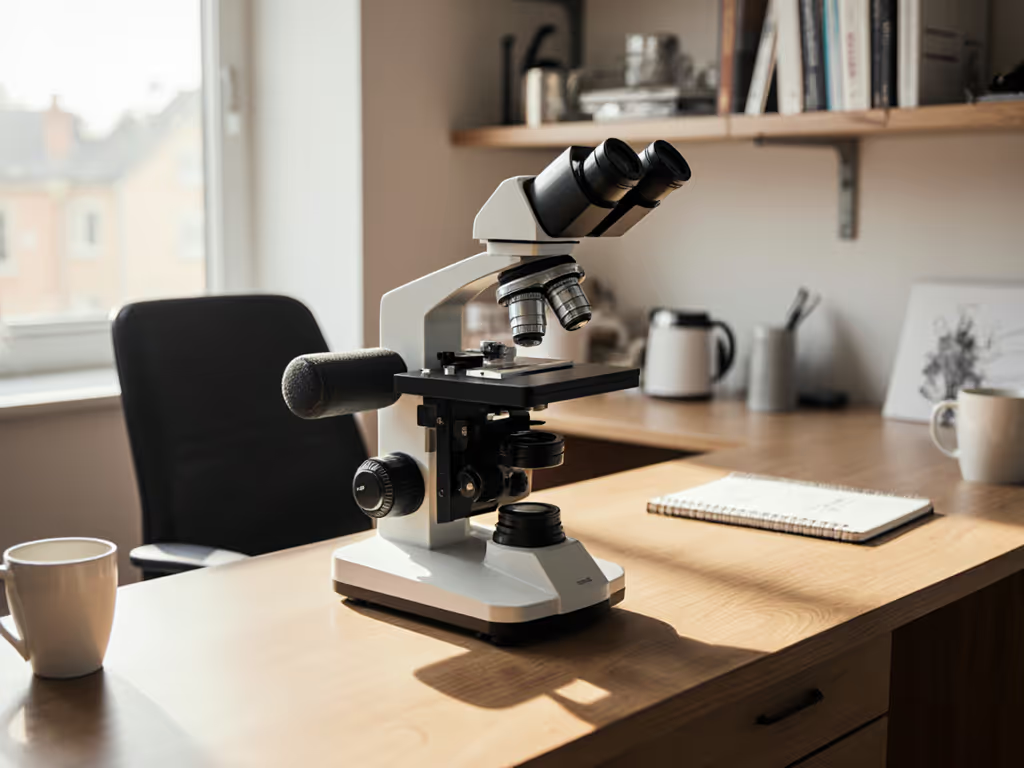
Vision-Friendly Microscope Accessories That Actually Work
By Omar Haddad • 10th Jan
Remember that nine-year-old who spotted tardigrades with a $2 pipette? Her secret wasn't expensive gear, it was accessible microscopy that met her where she was. For many curious beginners and hobbyists, vision challenges turn microscope exploration into frustration. But what if I told you that vision-friendly microscope accessories exist that don't require lab budgets or PhD-level expertise? You don't need perfect eyesight to explore the microscopic world. Let's reframe vision limitations as opportunities for smarter observing, with tools that prioritize comfort, clarity, and confidence. Small wins today grow into tomorrow's confident discoveries.
Why "Just Squinting" Isn't the Answer (And What Is)
Q: My eyes tire quickly, and I struggle to focus even at low magnification. Isn't this just part of using a microscope? A: Absolutely not! Microscopy should feel sustainable, not like a staring contest. Prolonged eye strain often stems from poor ergonomics, not your vision. Basic adjustments make a dramatic difference:
- Tilt your eyepieces, not your neck: A 15° to 25° adjustable binocular tube (like fixed ErgoWedges) lets you sit upright while viewing. No more hunching over your scope!
- Dial in your pupil distance: Many beginners skip this. Gently twist your eyepieces inward/outward until the image fuses into one clear circle. This reduces double vision and headaches.
- Lighting matters more than magnification: Swap harsh halogen bulbs for dimmable LED ring lights. Soft, adjustable illumination cuts glare instantly, especially helpful for low vision microscopy.
These are scaffolded steps: simple habit shifts that build comfort gradually. Start simple, learn fast.
Beating the "Compatibility Nightmare"
Q: I've bought cheap accessories that didn't fit my microscope. How do I avoid wasting money? A: Your microscope's tube diameter is the magic number. Before buying anything, measure:
- Remove your existing eyepieces.
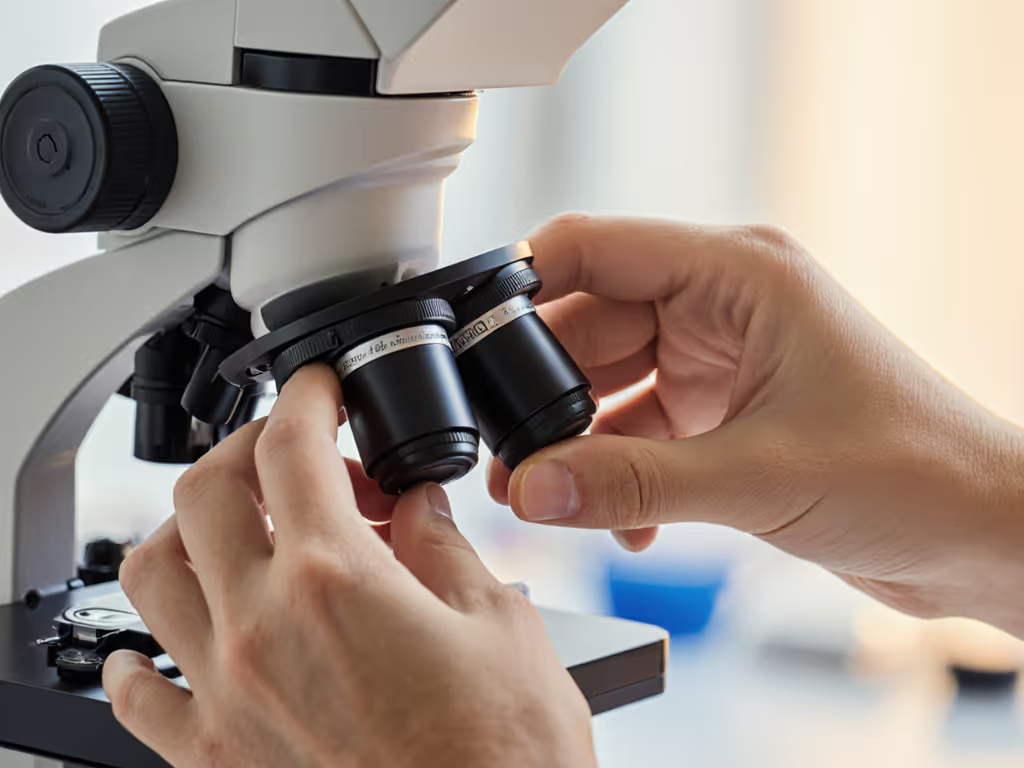
- Use calipers (or a ruler) to measure the outer diameter of the tube socket (typically 23.2mm, 30mm, or 30.5mm).
- Match accessories to this spec, not brand names. For brand-agnostic fit checks, use our accessory compatibility guide.
For example, universal smartphone adapters require knowing if your scope has a photo port or standard eyepiece tube. A $5 silicone coupler (not a rigid plastic one!) often solves smartphone alignment issues better than pricier "premium" mounts. Documentation struggles? Prioritize adaptive microscope tools with clear, illustrated instructions, like color-coded parts diagrams. When tools forgive setup errors, wonder becomes repeatable.
Blurry Images? Your Eyes Might Be Blaming the Wrong Culprit
Q: Even with reading glasses, everything looks hazy above 100x. Are my eyes just failing me? A: Surprisingly, 80% of "blurriness" stems from overlooked basics:
- Dirty optics: Microscopic dust on eyepieces magnifies distortion. Clean lens surfaces weekly with microfiber cloths (never tissues!). A single fiber can scatter light dramatically. For step-by-step cleaning and storage tips, see our microscope maintenance guide.
- Incorrect focus technique: Many beginners turn the fine focus knob too aggressively. Practice feathering, tiny, patient adjustments while blinking slowly. Set a timer for 30-second focus sessions to avoid eye fatigue.
- Sample prep errors: Thick specimens scatter light. For plant cells, try onion skin peeled thinner than plastic wrap. Use plain water mounts first, no fancy stains needed.
Gentle encouragement: Your eyes aren't broken; they're adapting to a new visual language. Daily 5-minute "focus drills" build stamina faster than you think.
Documenting Discoveries Without Breaking the Bank
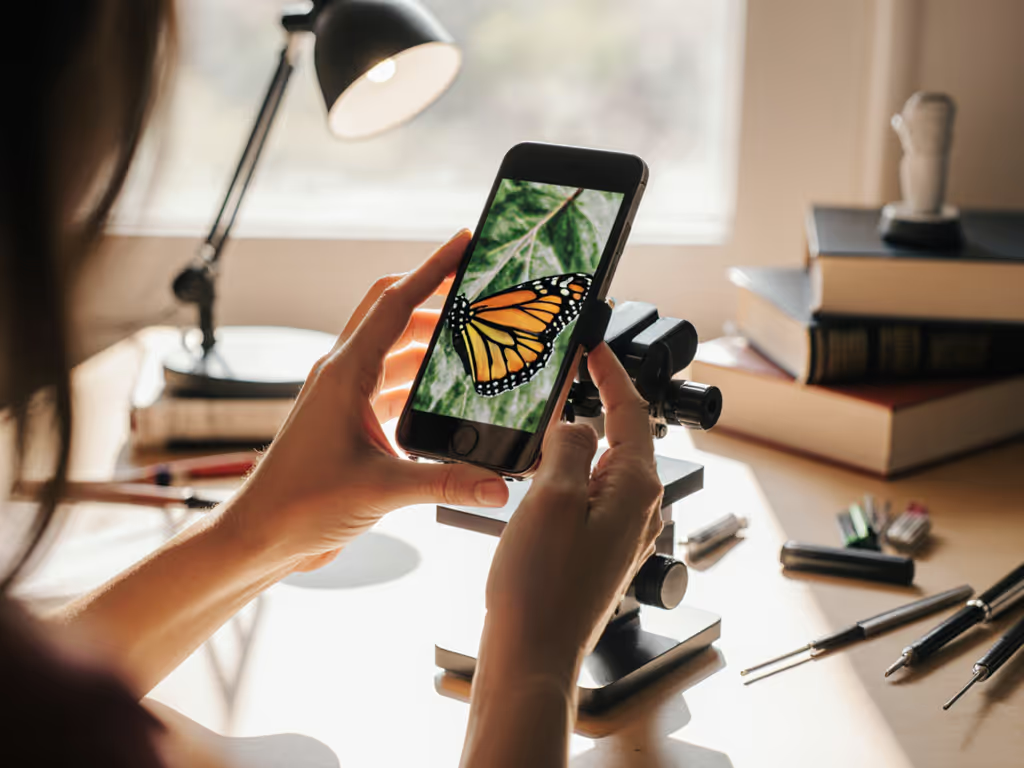
Q: I want to share cool finds online, but cameras seem complicated and expensive. A: Skip complex DSLR rigs. Modern smartphones are your most accessible microscopy camera: If you want hands-free stability, compare our best phone microscope adapters.
- The tape trick: Hold your phone camera directly over an eyepiece. Use painter's tape to stabilize it (no adapter needed). Film in landscape mode for better framing.
- Adjust exposure manually: Tap your phone screen on the specimen, then drag the sun icon down to -1.5 to avoid overexposure.
- Free apps boost quality: Try OpenCamera (Android) or ProCam (iOS) to lock white balance and shoot in RAW. This reduces color noise dramatically.
This approach nails inclusive microscopy, no special skills required. When I helped a legally blind hobbyist capture diatoms last year, we used only her iPhone's voiceover feature to navigate camera settings. Technology meets curiosity when we leverage tools already in our pockets.
Your Vision-Friendly Toolkit Checklist
Before investing in specialized gear, master these foundational habits:
- ✅ Ergonomic posture: Feet flat, elbows resting, screen at eye level (use books as risers!)
- ✅ 5-5-5 rule: Every 5 minutes, blink 5 times, then look 5 feet away for 5 seconds
- ✅ "Golden hour" lighting: Natural north-facing window light > artificial bulbs for reducing eye strain
- ✅ One-handed focus: Rest your wrist on the microscope stage while adjusting focus (this minimizes tremors)
These cost nothing but transform magnification aids from frustrating to functional. For longer sessions, consider ergonomic microscope accessories to reduce neck and eye strain. Remember: accessible tools aren't about compensating for limitations, they're about removing barriers to wonder.
The Real Breakthrough Isn't in the Gear, it's in You
Vision-friendly microscopy isn't a luxury, it's essential for keeping curiosity alive. When your tools adapt to you, not the reverse, every observation session becomes sustainable. That nine-year-old with tardigrades? She taught me that frustration dissolves when we prioritize human ergonomics over technical specs. Today's small win (a clean eyepiece, a properly tilted tube) builds tomorrow's confidence to tackle pond water or pollen grains.
Ready to explore deeper? Further Exploration:
→ Download our free "5-Minute Vision Reset" guide (includes illustrated eye exercises for microscopists)
→ Join the Beginner-Friendly Microscopy Challenge - share your first smartphone-microscope photo with #VisionFriendlyMicroscopy
Start simple, learn fast. Your next discovery is waiting, not in a fancy accessory, but in the next clear, comfortable look through the eyepiece.
Related Articles