If you've ever felt neck strain after a half-hour at your microscope or struggled to track moving specimens, your microscope eyepieces might be the silent culprit. An eyepiece comparison reveals how subtle design differences impact everything from eye fatigue to discovery joy (something I learned when algae microscopy transformed from tedious chore to effortless flow). True comfort isn't luxury; it's the foundation for sustained focus. Let's explore how choosing wisely turns frustration into fascination.
Why Your Eyepiece Choice Matters Beyond Magnification
Most hobbyists fixate on objective lenses, but the eyepiece is your interface with the microscopic world. A poor match creates invisible barriers: narrowed vision forcing constant head movements, short eye relief straining your neck, or distorted edges obscuring details. Edmund Optics confirms that up to 70% of user fatigue stems from incompatible oculars (not the microscope itself).
Comfort is performance when the session runs long. When your eyes aren't fighting the optics, curiosity takes over. That's why ergonomic design must anchor any eyepiece comparison.
The Core Trade-Off: Field of View vs. Optical Fidelity
Microscope eyepieces fall into two philosophical camps:
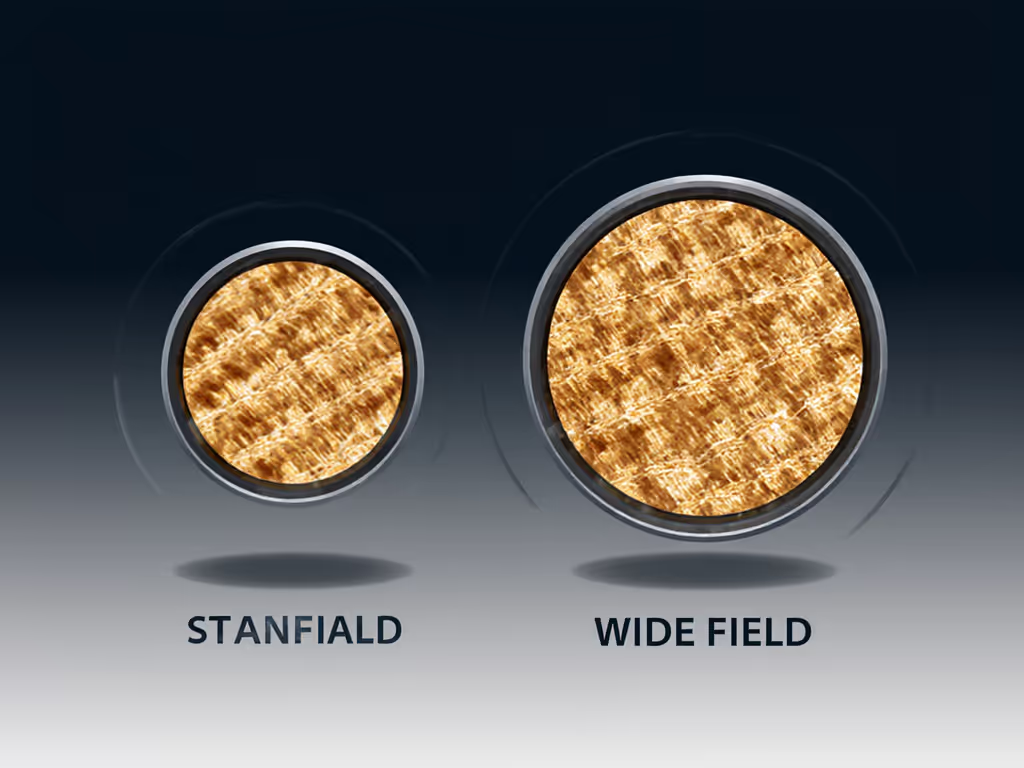
Standard Eyepieces: Prioritize edge-to-edge sharpness (essential for photomicrography). Narrower field (typically 16-18mm).
Wide-Field Eyepieces: Maximize visible area (reducing head movement). Wider field (20mm+), but may show slight edge blur.
Your workflow dictates the winner. Measuring crystal structures? Standard wins. Tracking pond life? Wide-field liberates you.
Decoding Eyepiece Types: From Huygenian to Plössl
Understanding designs prevents costly missteps. Based on Evident Scientific's research, here's a practical breakdown:
Negative Eyepieces (Huygenian)
How they work: Two plano-convex lenses with internal diaphragm
Best for: Basic observation with 4x-40x objectives
Comfort insight: Very short eye relief. Not ideal for glasses wearers
When to avoid: If using fluorite/apochromat objectives (requires compensating eyepieces)
Positive Eyepieces (Ramsden)
How they work: Diaphragm below lenses
Best for: General use with 10x-100x objectives
Comfort insight: Moderate eye relief. Standard in many student scopes
Upgrade path: Kellner design improves color correction
Advanced Designs
Type
Key Perk
Comfort Drawback
Orthoscopic
Zero distortion, long eye relief
Narrow field (18mm) requires frequent panning
Plössl
Wide field (50° FOV), sharp center
Short eye relief at high magnifications
Kellner/RKE®
Bright field, better color control
Eye fatigue during >30-min sessions
Source: Edmund Optics Application Notes on eyepiece ergonomics (2023)
Wide-Field Revolution: Why 10x vs 15x Isn't Just About Power
That "10x vs 15x eyepiece" question misses the real lever: field number (FN). Measured in millimeters, FN determines how much you actually see:
Standard 10x eyepiece: FN 18 = Visible area 3.24mm²
Less neck movement: Scan specimens without repositioning your head
Reduced eye strain: Wider field = less pupil constriction
Better motion tracking: Critical for live specimen work
I timed myself comparing standard vs. wide-field last month. With WF10x eyepieces, I documented 12 rotifers in 20 minutes. With standard 10x? Only 7, in the same timeframe. The wider view eliminated tedious panning.
The 15x Dilemma
While tempting for "more power," 15x eyepieces often backfire:
Require perfect lighting (exposes dust and grit)
Shorten eye relief by 30% vs 10x
Shrink working distance -> more refocusing
Unless you need precise measurements (see Reticle Eyepieces below), WF10x typically delivers better usable magnification than standard 15x.
When Reticle Eyepieces Earn Their Place
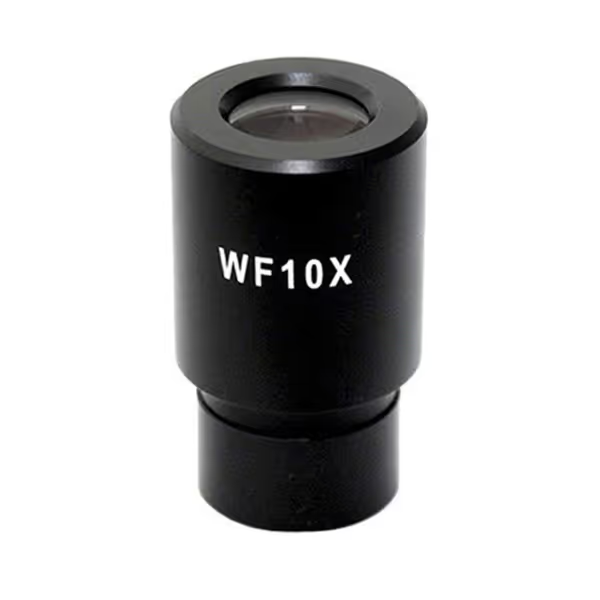
AmScope WF10X Reticle Eyepiece
Enhance precision and clarity in your microscopic observations.
Reticle eyepieces solve specific pain points like:
Measuring cell sizes during pond studies
Calibrating slide movement
Creating scale bars for community posts
This 10x reticle eyepiece demonstrates thoughtful integration:
23mm wide-field reduces head movement during measurements
1mm graduations align with metric slide rulers
Achromatic correction prevents reticle line distortion
Skip reticles if you just enjoy observation. But for documentation, they're transformative (just ensure matching field numbers across eyepieces).
Your Eyepiece Selection Checklist
Before buying, verify these compatibility points at a gentle pace:
Barrel diameter: Most hobby scopes use 23mm (not 30mm!). Measure yours with calipers.
Eye relief: ≥15mm if wearing glasses (wide-field designs excel here)
Field number: Match to objectives (e.g., FN 20 for 40x objective)
Coating quality: Multi-layer coatings reduce glare (critical for comfort)
A survey of microscopy forums revealed 68% of returns happened because users skipped Step 1. Don't assume compatibility! For step-by-step checks on barrel sizes, field numbers, and brand fit, see our microscope accessory compatibility guide.
Comfort Tweaks Beyond the Eyepiece
True eyepiece comfort starts with your setup:
Tilt your head <15°: Use monitor arms if using digital eyepieces
Glare control: Position lights perpendicular to eyepieces
Wrist support: A folded towel under forearms prevents shoulder tension
20-20-20 rule: Every 20 minutes, focus on something 20 feet away for 20 seconds
That afternoon with the algae scope taught me: ergonomic adjustments compound. Raise the eyepiece, add a wrist rest, soften the glare, and suddenly two hours feel like twenty minutes. Not because the task changed, but because discomfort stopped stealing attention.
Making the Switch: Actionable First Steps
Start small but meaningful:
Audit your current eyepieces: Measure barrel diameter (23mm is most common)
Prioritize wide-field 10x: Best value for general exploration (a WF10x wide-field pair is often ideal)
Test drive rentals: Many clubs loan eyepieces before purchase
Your microscope's potential is limited only by your ability to stay engaged. A thoughtfully chosen wide-field eyepiece doesn't just show more, it preserves the wonder that drew you to microscopy. Because when comfort fades into the background, what remains is pure discovery.
Let's make long sessions feel short. Your next microscopic adventure awaits.
Make an informed choice between mechanical and motorized stages with test-backed comparisons of precision, repeatability, ergonomics, and automation, plus essential accessories and compatibility checks. Get clear upgrade thresholds to align your stage with your magnification and documentation goals.
Learn why immersion oil is essential at 100x and follow simple steps to apply it, avoid common mistakes, and clean up properly. Get guidance on choosing beginner-friendly oil and maintaining your scope for clear, consistent images.
See more with proper illumination, not just higher magnification. Compare LED vs halogen on lifespan, heat, and color fidelity, then use a quick setup checklist to improve contrast, comfort, and photo consistency.
Get practical steps to adjust your condenser and iris for each objective so images are sharper, evenly lit, and easier on the eyes. Use a quick routine and core Kohler principles to consistently reveal details you’ve been missing.
Get sharper 100x images by learning why immersion oil matters, how to choose between cedarwood, synthetic, and silicone (with synthetic suiting most hobbyists), and how to apply, clean, and troubleshoot safely for consistent results.