Virtual Microscopy Labs: Stress-Free Skill Building
By Omar Haddad • 7th Feb
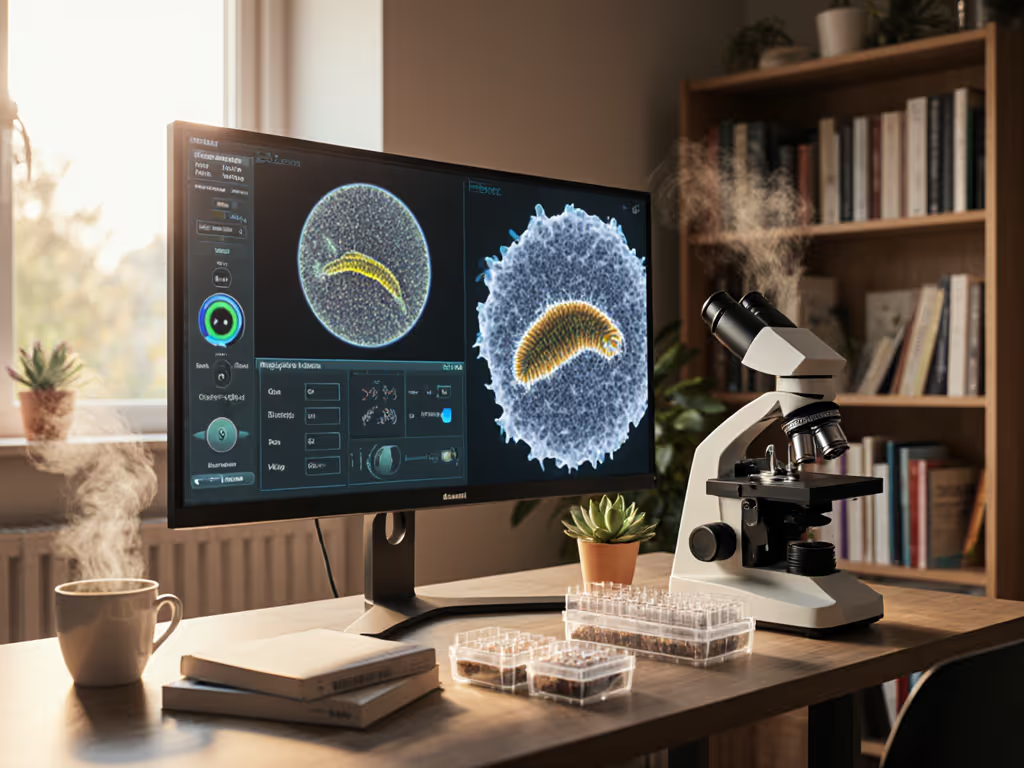
Have you ever hesitated to explore microscopy because you feared expensive mistakes or feeling overwhelmed? That's where virtual microscopy labs shine as your secret training ground. These digital microscopy education platforms let you build core skills without the pressure of handling delicate equipment. As someone who's watched countless beginners transform from tentative to confident, I can tell you that starting digitally often leads to smoother, more joyful real-world exploration. Small wins today grow into tomorrow's confident discoveries.
Why should beginners care about virtual microscopy environments?
Let's be honest: many of us feel intimidated by the idea of investing hundreds in equipment only to struggle with basic operation. When you're ready to explore gear, our essential microscope accessories guide helps you choose smart, beginner-friendly upgrades. Virtual labs eliminate that fear by providing a "practice space" where you can:
- Make mistakes without breaking anything
- Learn at your own pace without judgment
- Focus on understanding principles rather than wrestling with equipment
I remember working with a community group where one participant kept backing out of microscope workshops, convinced she "wasn't science-minded." After just three sessions using a virtual microscope training app, she not only attended our in-person session but became the first to spot amebas in pond water. That's the power of building competence in a stress-free environment.
How do virtual labs actually reduce learning anxiety?
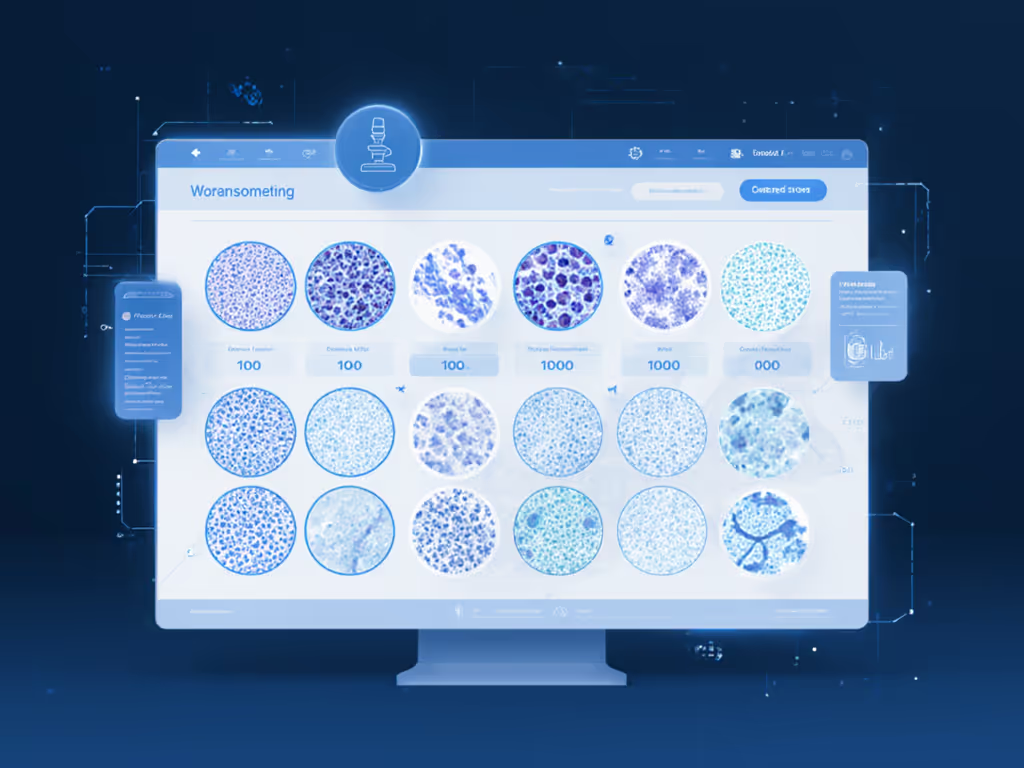
The beauty of microscope simulation software lies in what it removes from your beginner experience:
The Equipment Fear Factor No more worrying about:
- Bumping the stage and losing your specimen
- Smudging lenses with improper cleaning
- Misaligning the light source
- Paying for damaged components
The "Am I Doing This Right?" Loop With traditional microscopy, beginners often get stuck in cycles of:
- Adjusting focus
- Losing the specimen
- Questioning their technique
- Starting over
Virtual environments let you reset instantly and try again (no wasted time or mounting frustration). When you start using real optics, follow our microscope maintenance guide to keep lenses clear and avoid costly mistakes.
Start simple, learn fast. This isn't about replacing physical microscopy but building your foundational understanding where experimentation feels safe.
Can virtual training actually prepare me for real microscope work?
Many ask: "If I practice digitally, will I actually transfer those skills to a physical microscope?" Research confirms yes: students using virtual platforms perform better in traditional lab assessments. Why?
Muscle Memory Development Even though you're clicking rather than turning knobs, you're building:
- Understanding of focal planes
- Scanning patterns
- Magnification relationships
Mental Models Before Mechanics You learn what to expect before handling equipment. For a clear overview of power and image scale, see microscope magnification explained. When you finally use a physical microscope, you're not simultaneously learning:
- How microscopes work
- How this specific microscope works
- What you're supposed to be seeing
This layered approach prevents cognitive overload, something I emphasize in all my workshops. Remember that nine-year-old who found tardigrades with basic tools? She succeeded because she understood what to look for before touching equipment.
What makes certain virtual microscope training tools better for beginners?
Not all microscopy learning tools are created equally. Look for platforms that offer:
- Scaffolded challenges (starting with simple slides before complex specimens)
- Realistic controls (simulating actual knob adjustments)
- Visual feedback (showing correct focus range, field of view)
- No time pressure (allowing thoughtful exploration)
Avoid platforms that:
- Jump straight to advanced techniques
- Use confusing technical jargon
- Require perfect virtual "hand-eye coordination"
The best educational microscopy apps mirror how we naturally learn: by making small, observable progress with each attempt. When you rotate a virtual knob and immediately see the effect, you're building the mental connections that will serve you when you use physical equipment. When you move to a real scope, understanding microscope illumination choices will help you replicate what you practiced digitally.
How can I integrate virtual practice with my physical microscope journey?
Here's where many get stuck, they treat virtual and physical as separate paths rather than complementary tools. Try this scaffolded approach:
Week 1: Digital Familiarization
- Practice navigating slides virtually
- Learn basic terminology through interactive prompts
- Identify common specimen types
Week 2: Paired Practice
- After virtual session, attempt same task physically
- Notice where digital preparation helped ("Ah, now I understand why focus matters!")
Week 3: Problem-Solving
- Use virtual platform to troubleshoot physical microscope issues
- "Why can't I see anything?" -> Practice virtual focusing techniques first
This method transforms frustrating moments into learning opportunities. If clarity is still an issue, our microscope slide preparation guide shows how to avoid bubbles and blur. Instead of "I broke it," you'll think "Let me practice this virtually first."
Will I miss out on the "real" experience by starting digitally?
Many worry virtual practice lacks the magic of actual discovery. But consider:
What beginners actually struggle with
- 70% of early frustration comes from equipment operation, not specimen observation
- Most give up before seeing anything interesting due to technical hurdles
What virtual practice preserves
- The wonder of discovery (when you finally see cellular structures)
- The satisfaction of skill-building (mastering focus techniques)
- The confidence to explore further
I've seen more beginners quit after three failed attempts with physical microscopes than after months of virtual practice. Virtual labs protect your curiosity by removing early barriers, so when you do see that first tardigrade or pollen grain, the moment feels earned, not accidental.
Taking your next confident step
Virtual microscopy labs aren't the destination; they're your launchpad. They transform "I could never understand this" into "I wonder what I'll discover next." By building skills in a judgment-free zone, you're not just learning microscopy; you're rebuilding your relationship with learning itself.
Ready to experience stress-free skill building? Try a free virtual microscope platform for just 15 minutes. Notice how much more prepared you feel when you next approach your physical equipment. Remember my favorite workshop moment, the nine-year-old's smile when she saw that tardigrade wriggle? That's the joy awaiting you when confidence replaces confusion.
Start simple, learn fast, and let your curiosity lead the way. Your microscopic world awaits (no PhD or expensive gear required).
Related Articles