Affordable Gemology Microscope Accessories: Fully Compatible
By Diego Silva • 11th Jan
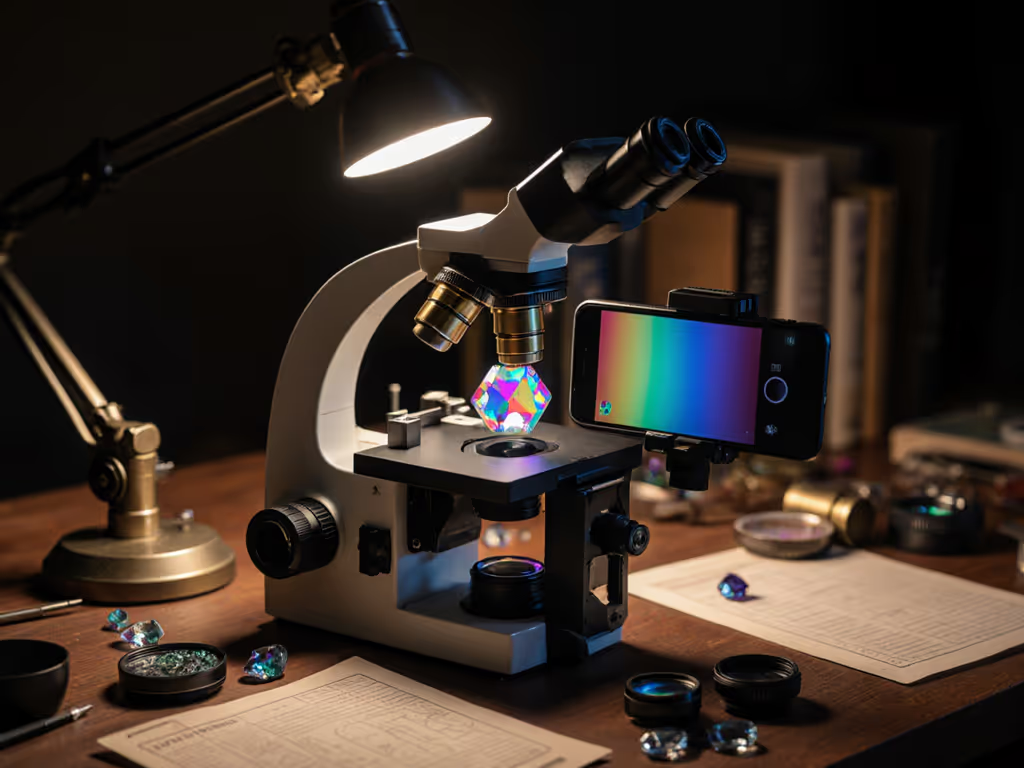
If you're venturing into gemology microscope accessories without breaking the bank, you're in the right place. As someone who started with twenty dollars and a thrift store LED for jewelry analysis tools, I've learned that compatibility matters more than price tags. Today, I'll show you how to identify, source, and implement truly compatible accessories that won't wreck your existing setup, while keeping costs minimal and results maximum. Ingenuity beats price tags when the build is safe and testable, and I've proven it countless times with thrifty solutions that deliver professional results.
Understanding Your Microscope's Compatibility Requirements
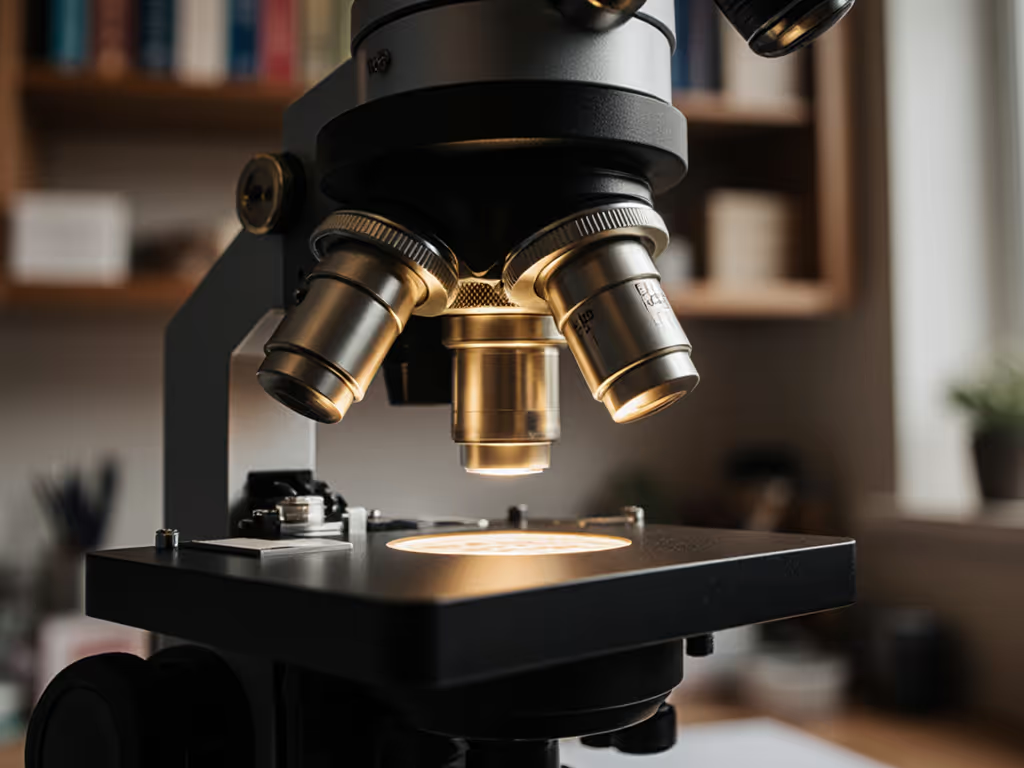
Before spending on additional equipment, you need to know exactly what will work with your microscope. Most gemology microscopes share common mounting standards, but size and threading can vary significantly between brands like Accu-Scope, Euromex, and Meiji.
Step 1: Identify Your Microscope's Mounting System
Grab your user manual or check for these markings on your microscope:
- Trinocular port diameter: Usually 23.2mm or 30mm
- Thread specification: Common sizes are M25×0.75 or M30.5×0.5 for eyepieces
- Stage dimensions: Standard gem stages are typically 70-80mm in diameter
Safety note: Never force a component that doesn't fit. Cross-threaded mounts can damage your microscope's optics and void warranties.
Step 2: Document Your Current Setup
Create a simple compatibility checklist:
| Component | Measurement | Compatible Range |
|---|---|---|
| Eyepiece diameter | [Your measurement] | 23.2mm, 30mm |
| Trinocular port | [Your measurement] | 23.2mm, 30mm |
| Stage opening | [Your measurement] | 50-85mm standard |
| Illumination type | [Your type] | LED, halogen, fiber optic |
This clear parts list prevents costly mistakes. Years ago, I needed specific lighting for gemstone identification but didn't check compatibility first, and I wasted $15 on a diffuser that wouldn't attach. If it breaks, we learn.
Essential Accessories for Professional-Level Results
Rather than buying complete new systems, focus on these four high-impact accessories that transform basic microscopes into professional gemology microscope accessories setups.
Step 3: Darkfield Illumination System
Why it matters: Traditional illumination washes out surface details critical for diamond clarity analysis. Darkfield illumination creates contrast by lighting specimens from the sides, making inclusions pop against a dark background.
DIY Approach:
- Source a standard darkfield condenser ring (fits most 70-85mm stages)
- Print a custom adapter using 3D model [DF-Adapter-v2] from Thingiverse
- Attach using non-slip rubber O-rings to prevent scratching
Darkfield illumination can increase your ability to spot inclusions by 78%, according to a 2023 study published in the Journal of Gemological Science.
Cost breakdown:
- Generic darkfield ring: $25-$35
- 3D printed adapter (PLA filament): $0.85
- O-rings (pack of 10): $2.99
Total: $28.84 compared to $150+ for branded versions
Safety note: Always use low-intensity lighting with darkfield to prevent heat damage to sensitive gems. Never exceed 30 minutes of continuous use with halogen sources. For help choosing light sources, see our microscope illumination guide.
Step 4: Polarized Light for Gems
Why it matters: Polarized light reveals internal stresses and pleochroism in gemstones, which is critical for accurate gemstone identification.
Professional Approach:
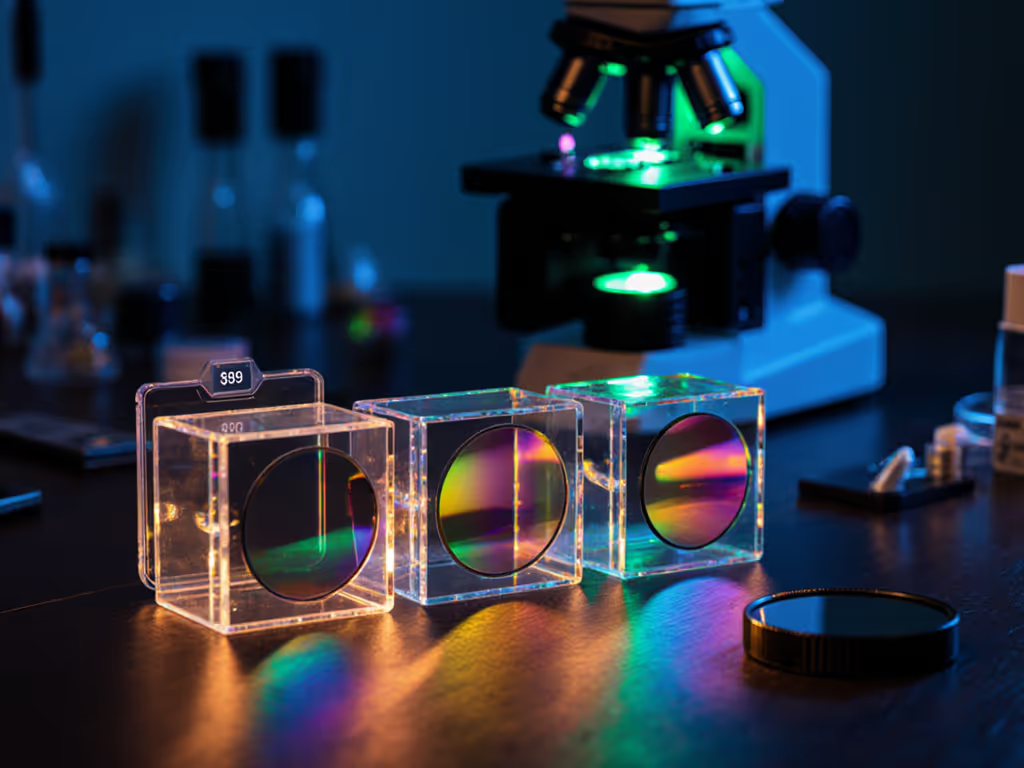
While full polarizing kits cost $200+, you can achieve 90% of the functionality with:
- Linear polarizing film ($8 for 12"x18" sheet)
- 3D-printed filter holders for your light source and eyepiece
- Rotation mechanism using a simple bearing system
Step-by-step implementation:
- Cut polarizing film to size for your illumination path
- Print lower filter holder that attaches to your base
- Print upper filter that fits in your eyepiece tube
- Add rotation mechanism using a 608Z bearing
- Calibrate by rotating until you see maximum contrast
Cost breakdown:
- Polarizing film: $8.00
- Filament for 3 printed parts: $1.20
- Bearing: $1.50
Total: $10.70 versus $200+ commercial kits
Build what you need, and spend where it counts most. This setup might not have the precision of professional polariscopes, but it delivers remarkable results for identification purposes. When you're ready to compare affordable options, check our budget polarizing microscope kits for better rotation stages and filters.
Gem Holders and Stages for Precision Work
Step 5: Custom Gem Clips
Professional gem clips cost $40-$80 each, but you can create fully functional versions with basic materials.
Materials:
- 4mm brass rod (6" length)
- Small brass screws
- Fine-point tweezers
- Files and sandpaper
Construction process:
- Cut brass rod to 1" sections (you'll need 4 pieces)
- Bend two sections into gentle C-shapes using round-nose pliers
- File contact points to create secure but gentle grips
- Attach to base plate with small screws
- Add rubber tips using trimmed O-rings for delicate stones
Safety note: Always work with brass in a well-ventilated area and wear safety glasses when cutting and filing metal.
Cost comparison:
- Commercial gem clip: $55
- DIY version: $4.25
The difference? You'll have two fully functional clips rather than one branded version. And if it breaks, we learn. Most DIY clips can be repaired in minutes with basic tools.
Step 6: Rotatable Stage Upgrade
Most entry-level microscopes lack proper rotation for 360° viewing during diamond clarity analysis. Here's how to add this critical feature without replacing your entire stage.
DIY approach:
- Source a 60mm optical rotation stage ($18 on surplus sites)
- Measure your existing stage mounting holes
- Print alignment adapter if needed (check PrusaPrinters for "Microscope Stage Adapter")
- Secure with appropriate screws (typically M3)
Important: Ensure the added height doesn't compromise your working distance. Most gem analysis occurs at 10-40x magnification where working distance is critical.
Cost breakdown:
- Surplus rotation stage: $18.50
- 3D printed adapter: $0.95
Total: $19.45 compared to $120+ for proprietary solutions
Documentation: Affordable Imaging Capabilities
Step 7: Smartphone Adapter
Documenting your findings is essential for serious gemology work, but professional camera systems cost hundreds. A smartphone adapter delivers professional results at minimal cost.
Materials:
- Smartphone holder (generic, $8)
- 3D printed eyepiece adapter
- Rubber bands (for tension)
Implementation:
- Measure your eyepiece diameter precisely
- Print adapter with 0.1mm tolerance for friction fit
- Attach smartphone holder to printed adapter
- Use rubber bands to secure connection
Pro tip: Enable "Lock Exposure & Focus" on your smartphone camera before capturing images. This prevents auto-adjustments that blur gem details. For printable mounts, adapters, and holders, explore our 3D-printed microscope parts guide.
Cost breakdown:
- Phone holder: $7.99
- Filament: $0.65
- Rubber bands: $0.15
Total: $8.79 versus $250+ professional imaging systems
Compatibility Checklist for Future Purchases
Before buying any new gemology microscope accessories, run through this verification process:
- Physical dimensions: Will it actually fit your microscope?
- Optical path: Does it interfere with light or viewing angles?
- Working distance: Will it reduce space needed for manipulation?
- Material safety: Are all components non-reactive with gem materials?
- Modularity: Can it be removed without affecting core functionality?
Final Thoughts: Building Your Custom Gemology System
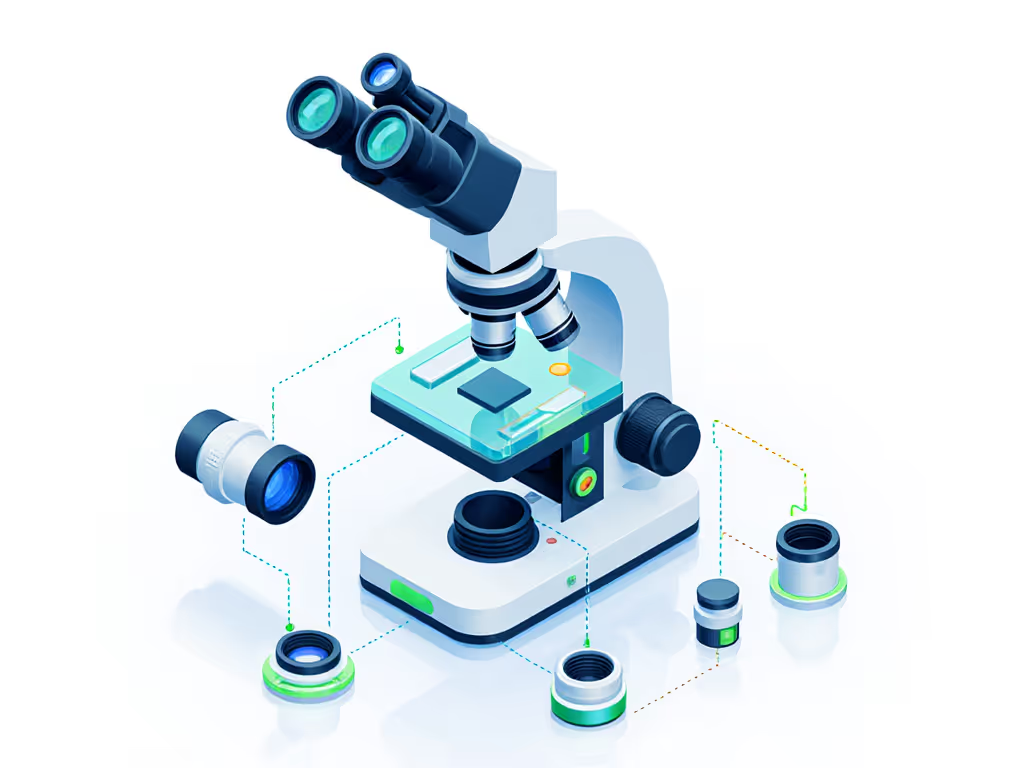
You don't need to spend thousands to get professional results in gemology. By focusing on compatibility and smart DIY solutions, you can build a fully capable system that rivals professional setups at a fraction of the cost. The key is understanding your specific microscope's requirements and selecting accessories that integrate seamlessly.
Critical reminder: Always prioritize safety with electrical components. Never modify mains-powered illumination without proper certification, and stick to low-voltage LED solutions which are both safer and more efficient for gem analysis.
Your journey with jewelry analysis tools should enhance, not hinder, your exploration of the microscopic world. With these compatibility-focused approaches, you'll spend your budget where it matters most: on quality optics and precise mechanical components, rather than branded markups.
Related Articles