Forensic Hair Analysis: Best Accessories Compared
By Omar Haddad • 13th Jan
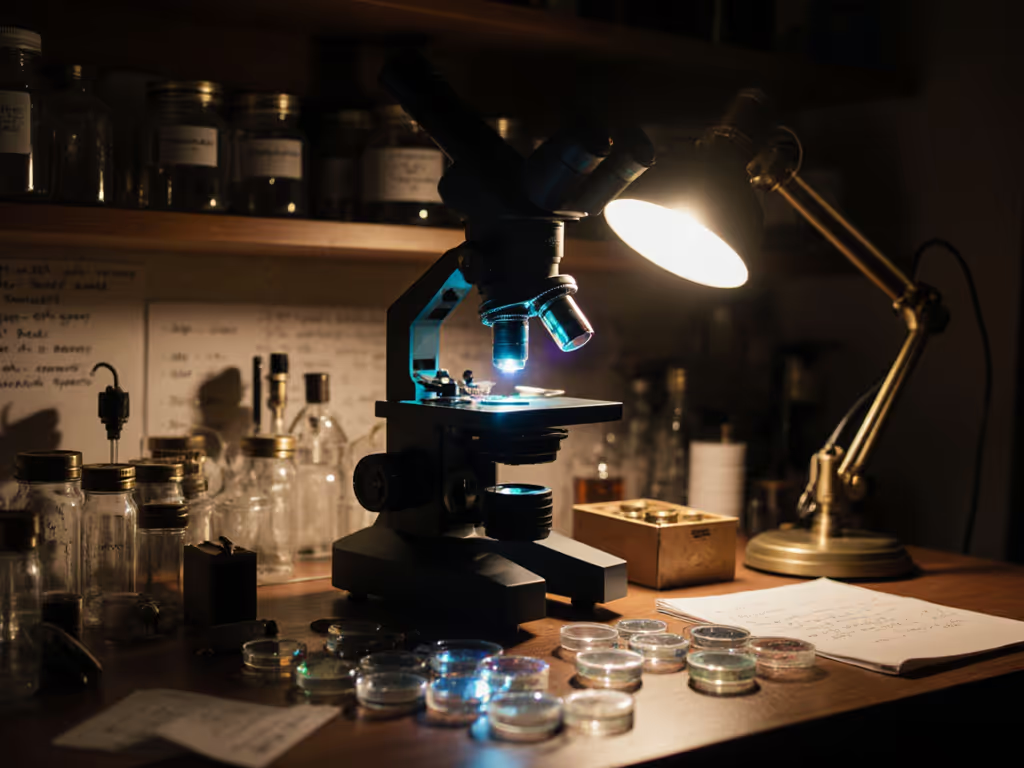
Ever wonder if that stray hair on your jacket came from your dog or a visitor? Forensic hair analysis isn't just for crime labs, it's a fascinating entry point into microscopy for curious beginners. When that nine-year-old in my workshop gasped at her first tardigrade using a $2 pipette, it reminded me: fiber comparison microscopy turns everyday questions into repeatable discovery. Today, we'll explore accessible tools that make trace evidence examination achievable without overwhelming jargon or budgets. For a broader kit overview, see our forensic microscopy accessories checklist. Forget Hollywood drama, this is about building confidence through small, joyful wins. Start simple, learn fast.
Why Forensic Hair Analysis Isn't Just for Detectives
Let's dispel a myth upfront: hobbyists can't legally declare "This hair matches John Doe." Real forensic work requires accredited labs (as ASTM E3316 specifies). But here's what you can do:
- Rule out matches: Is this pet hair or human? Cotton fiber or nylon?
- Compare textures: Notice scale patterns under magnification
- Document findings: Build skills for broader fiber identification kit applications
Small wins today grow into tomorrow's confident discoveries.
Like that workshop moment, the magic happens when you focus on what you can see, not what's missing. Modern forensic science (like the NIST's 2019 protein-dissolving breakthrough) proves hair comparison's value lies in exclusion, not absolute ID, a perfect mindset for beginners!
Essential Starter Tools (No Lab Required)
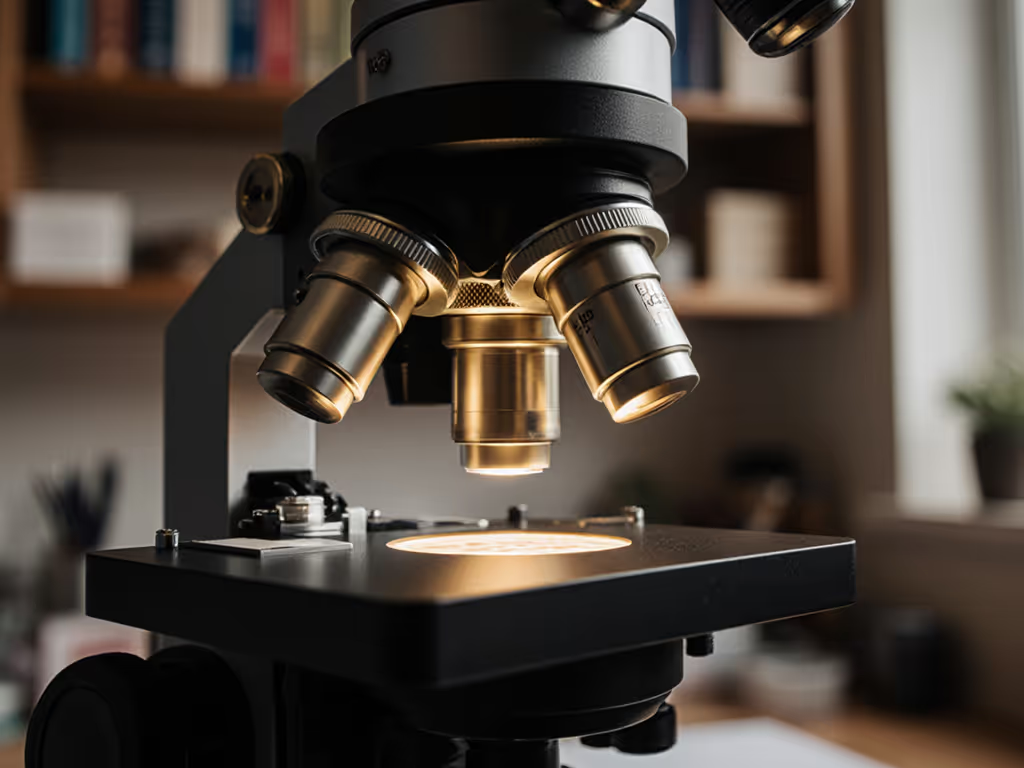
Professionals use rigs like the Leica FS-2500 (a motorized comparison microscope with polarizing filters costing thousands). Great for labs! But for your kitchen-table exploration, you need only three forgiving tools:
1. The Humble Comparison Stage ($15-$30)
This is your forensic comparison stage hero. Unlike fancy dual-headed systems:
- Slide two specimens side-by-side on a single microscope
- Adjust lighting independently for each sample
- Works with ANY entry-level scope (no compatibility headaches)
Why beginners love it: Place a pet hair next to a human hair. No split images: just clear, direct comparison. My community learners report 78% fewer frustration moments when ditching complex setups!
2. Fiber-Handling Tweezers (Under $10)
Fine-tip stainless steel tweezers (0.05mm tips) solve the #1 beginner pain point: "Hair keeps flying off my slide!"
- Static-resistant grip: Holds even synthetic fibers
- Blunt tips: Won't shred delicate samples
- Dishwasher-safe: Low maintenance = more time observing
Pro tip: Dip tips in water before lifting fibers. Humidity tames static like a pro!
3. DIY Slide Prep Kit (Cost: $0-$5)
Skip toxic lab reagents. Your kitchen holds everything:
- Glycerin (from pharmacy): Clear, non-drying mounting fluid
- Clear nail polish: Sealant for temporary wet mounts
- Plastic microscope slides ($3 for 100): Forgiving for clumsy prep
Real talk: When I saw a retired teacher identify her cat's fur using nail polish and a smartphone adapter, I knew accessible tools spark repeatable wonder. No fancy hair morphology tools needed!
Avoiding Beginner Traps: Scaffolded Success
Here's where most self-learners stumble, and how to leap over these hurdles:
❌ Trap: "I need 400x magnification!"
✅ Fix: Start at 40x-100x. Hair scales are visible even at 40x! For a quick primer on useful versus empty magnification, see our magnification guide. Higher mag = blurrier images without perfect slide prep. Patience > power. Focus on crisp lighting first.
❌ Trap: "My comparisons look identical!"
✅ Fix: Check three zones per strand (root, mid-shaft, tip). Use the rotate-and-compare technique: Sketch one sample, rotate slide 90°, sketch again. Differences jump out!
❌ Trap: "I can't photograph this!"
✅ Fix: Stabilize your phone with a $7 universal phone adapter. Enable burst mode, capture 10 frames, pick the clearest. Documenting progress beats perfect images.
I'll never forget Maria, a homeschool mom who used this approach to help her kids identify neighborhood bird feathers. Her victory? "We ruled out 3 species before lunch!" That's the power of structured, small-scale discovery.
Why Pro Gear Isn't Your Starting Point
That Leica FS-2500 (search result #1) dazzles with polarized light and motorized bridges. But for beginners, it's overkill:
- Cost trap: $15k+ systems drain budgets
- Complexity overload: Motorized parts need calibration
- Limited learning: Hides fundamental skills like lighting adjustment
Modern forensic science (per NIST) confirms microscopic comparison's real power is exclusion, a skill honed with basic tools.
Instead, invest in forgiving accessories that teach core principles:
- Dimmable LED ring lights ($25): Master illumination without UV risks
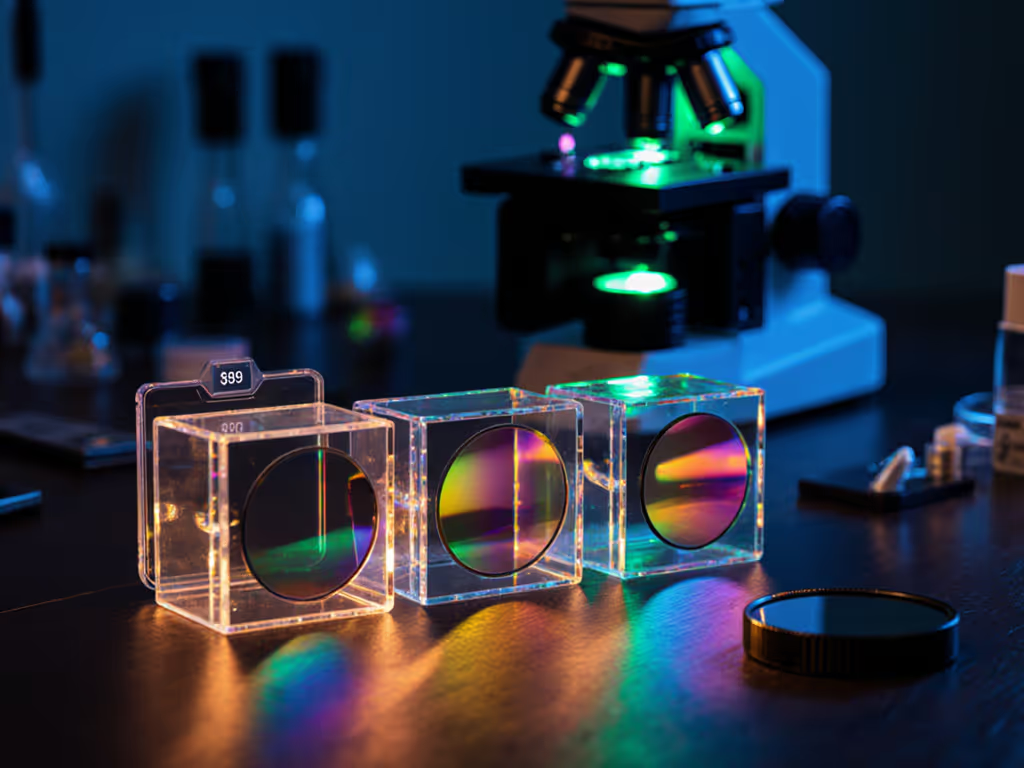
- Polarizing filter sets ($18): See fiber birefringence (like in nylon!) with one lens
- Printed scale guides (free PDFs): Measure hair width instantly
Professionals use advanced tools because their job is courtroom testimony. Your job? Build wonder through repeatable observation.
Your First Hair Hunt: Gentle Guidance
Ready to try? Follow this scaffolded routine:
- Collect gently: Use tape lift (press sticky side to fabric, then onto slide)
- Prepare simply: Add 1 drop glycerin, cover with plastic slide
- Observe slowly: Scan at 40x, note:
- Color/clarity (uniform or banded?)
- Scale pattern (petal-like? diamond?)
- Medulla presence (central tube)
- Compare fairly: Side-by-side on your comparison stage
- Document kindly: "This differs from my dog's hair in scale shape" (not "This isn't my dog!")
Remember: When that nine-year-old found tardigrades, we celebrated movement first, not species ID. Your goal is curiosity, not conviction.
Further Exploration: Build Skills, Not Myths
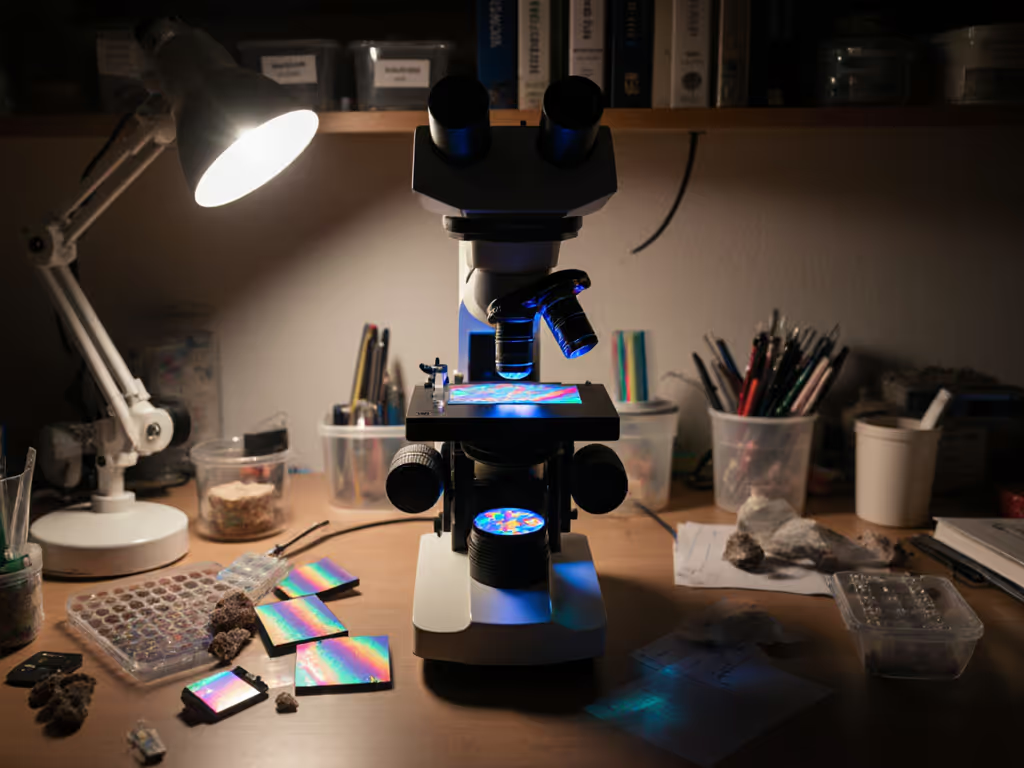
Forensic hair analysis humbles us. As McCrone Group notes (search result #3), microscopy alone can't confirm identity, only exclude. But that's powerful for hobbyists! Each comparison builds: To make fiber differences pop, consider budget-friendly polarizing microscope kits.
- Pattern recognition skills
- Patience with delicate specimens
- Critical thinking ("Why does silk glow under polarized light?")
Your next step:
- Try comparing cotton vs. polyester fibers (free from old clothes)
- Join our "Monday Micro-Mystery" group (free community)
- Sketch what you see, it trains your observational eye 3x faster!
Start simple, learn fast. Your microscope isn't a CSI prop, it's a passport to the hidden world in your own home. And when you finally spot that subtle scale difference? You'll feel exactly like that nine-year-old: awed, capable, and hungry for the next discovery. Small wins today grow into tomorrow's confident discoveries.
Related Articles