IoT Microscopy Accessories: Forgiving Setup, Real Results
By Omar Haddad • 30th Nov
Have you ever stared at your microscope, wondering why your images won't share properly or why your setup feels like solving a puzzle? You're not alone. IoT microscopy transforms this frustration into effortless discovery, and modern smart microscope accessories are finally designed for people like us, not lab technicians. Forget complex installations; today's best tools prioritize forgiving setup and immediate, shareable results. At its heart, this isn't about fancy tech, it's about turning your kitchen-table microscope into a window to wonder, where curiosity scales with confidence.
As a community educator, I meet adults and families daily who love exploring the microscopic world but feel defeated by incompatible parts or confusing apps. They've bought cheap adapters that fog lenses or "smart" cameras that need PhD-level setup. Sound familiar? Let's cut through the noise with practical answers to your real questions.
Why "IoT Microscopy" Isn't Just a Buzzword for Hobbyists
How does IoT actually help my beginner setup?
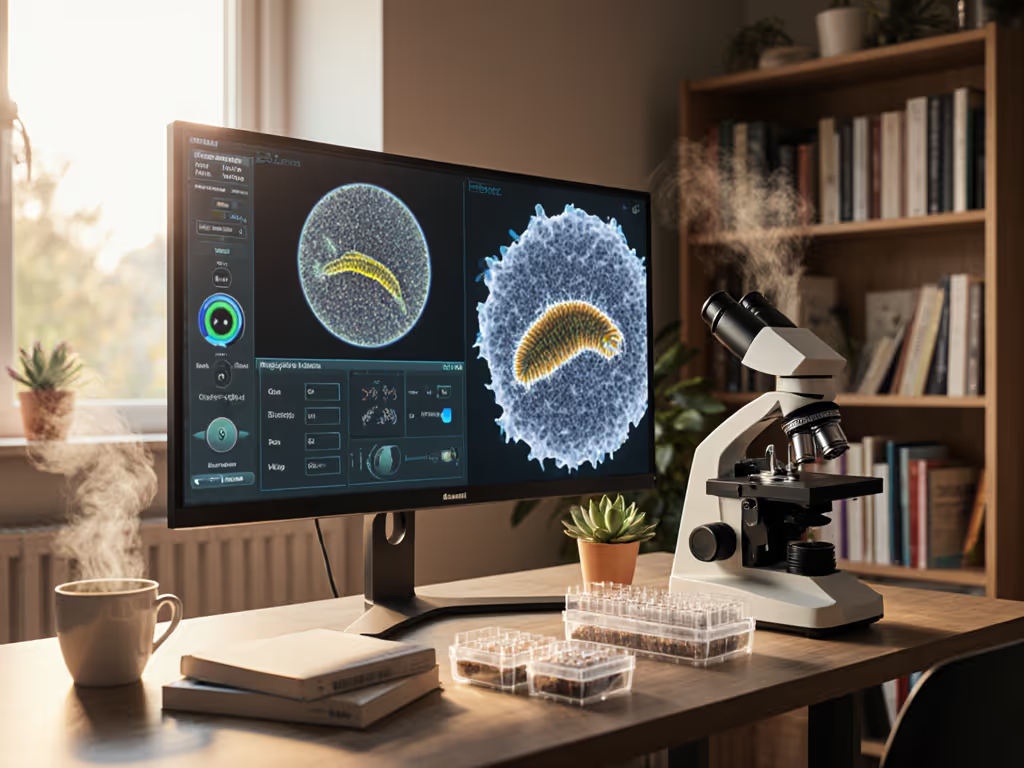
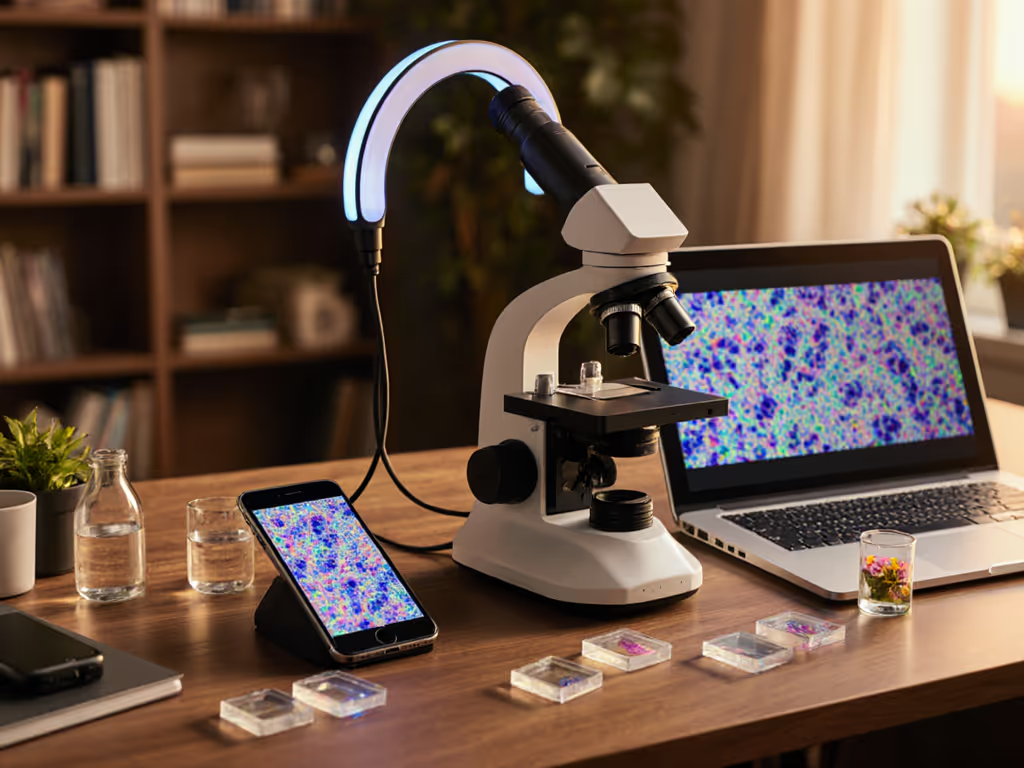
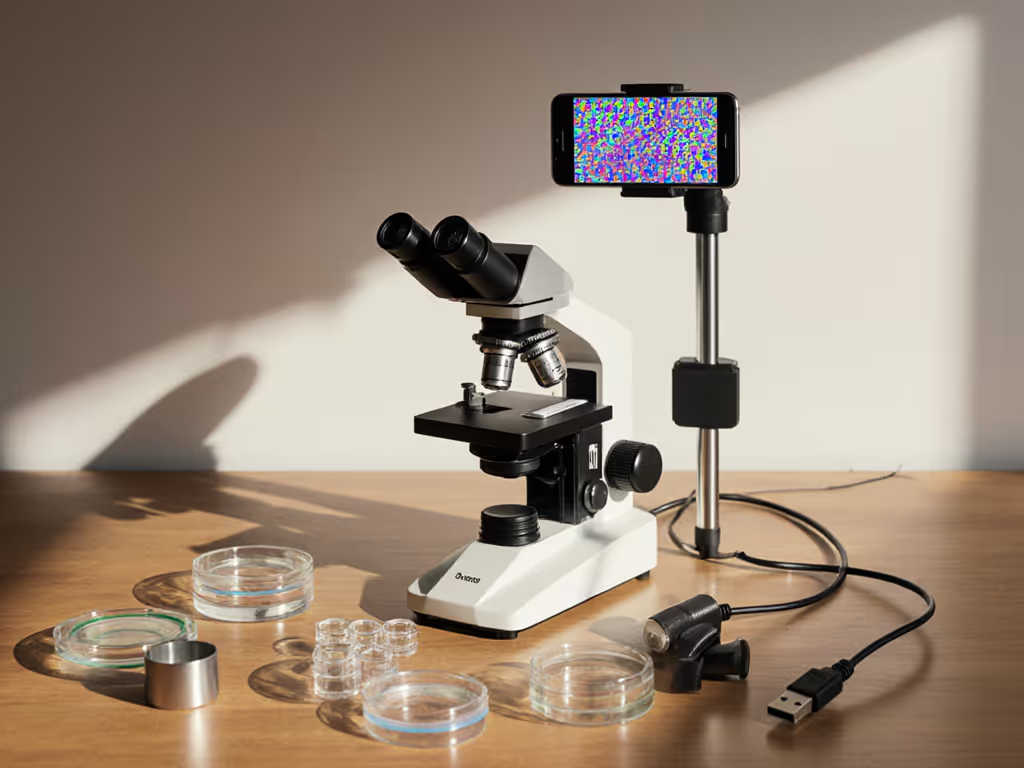
IoT (Internet of Things) in microscopy simply means your gear talks to devices you already own, like your smartphone or tablet. No more trinocular heads, C-mounts, or expensive proprietary software. For example, a smart adapter clips onto your existing eyepiece and streams live images to your phone. This solves two huge pain points at once: compatibility and sharing. You're not buying a new microscope; you're adding one forgiving accessory that turns your current scope into a connected tool.
Small wins today grow into tomorrow's confident discoveries.
Unlike clinical "connected lab equipment" systems costing thousands, entry-level IoT accessories prioritize plug-and-play simplicity. Look for devices that work via standard USB-C or Bluetooth (no special drivers needed). I recently watched a retiree troubleshoot pond water with a $99 smart adapter and her iPad. She emailed her tardigrade find to grandkids within minutes. That's the magic: real results without lab-grade complexity.
Will this work with my current microscope?
Absolutely, and compatibility is easier than you think. Most hobbyist microscopes share standardized eyepiece tube sizes (23.2mm or 30mm). Modern IoT accessories, like universal C-mount adapters or smartphone holders, accommodate these out-of-the-box. Skip products demanding "custom calibration"; true beginner-friendly gear uses mechanical fits, not software hacks.
Here's what to check:
- Tube diameter: Measure your eyepiece with a ruler (most are 23-30mm)
- Connection type: USB-C adapters > Bluetooth (less lag for live viewing)
- App simplicity: One-tap sharing > multi-step workflows
Avoid anything requiring "predictive maintenance" alerts or industrial-grade diagnostics (overkill for hobby use). Stick to accessories that solve your problem: getting clear images onto your screen fast.
Cutting Costs Without Sacrificing Quality
How can I avoid wasting money on junk accessories?
I get it: You don't want to blow $200 on a camera that gives blurry photos. Start with these budget-smart rules:
- Prioritize optical purity: Lenses should be glass (not plastic), with anti-reflective coating. Test under store lights; if it glares, skip it.
- Demand universal compatibility: "Works with any microscope" is key. Avoid brand-locked systems.
- Skip "pro" features: No need for HIPAA compliance or AI analysis in your starter kit.
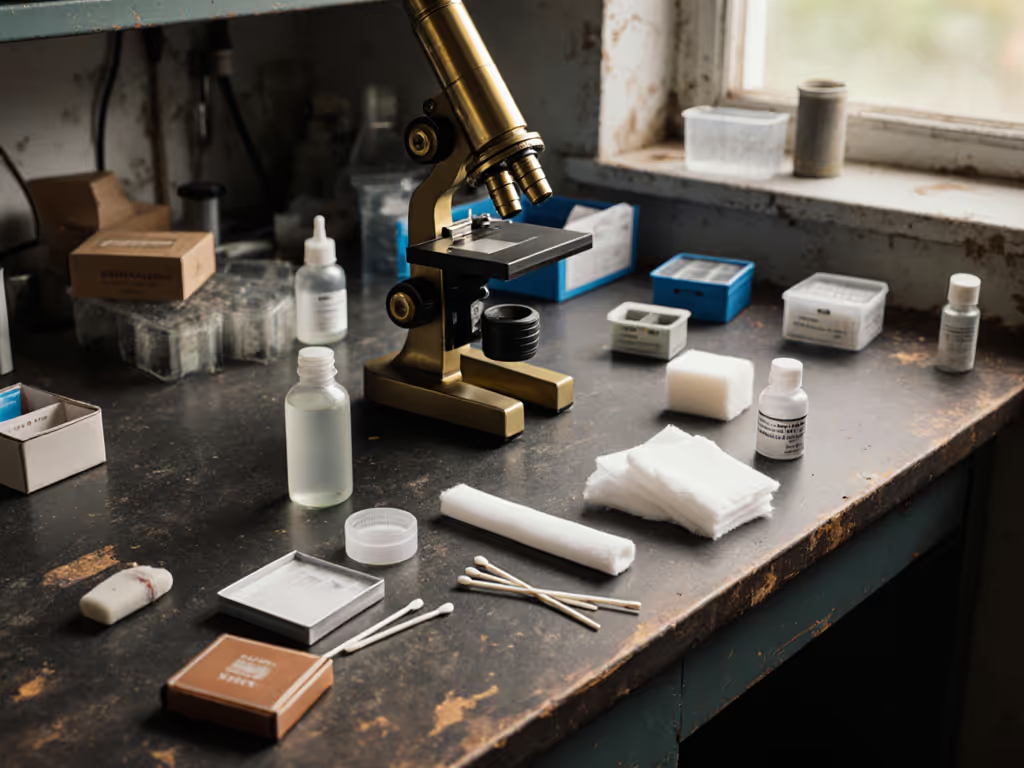
One often-overlooked saver? Proper lens maintenance. For a step-by-step cleanup routine, follow our microscope maintenance guide. Dust and smudges ruin even $5,000 setups. That's why I always recommend the
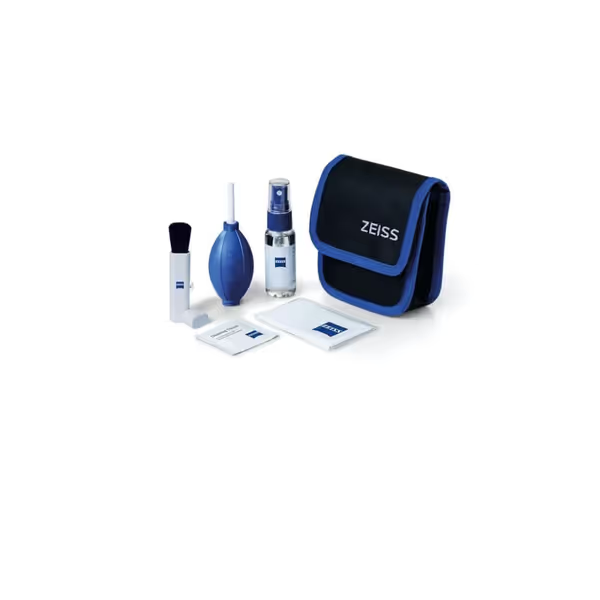
ZEISS Lens Cleaning Kit
Maintain pristine optics for crystal-clear microscopic discoveries.
$44.95
BrandZeiss
BrandZeiss
Pros
Professional-grade cleaning power for all lenses.
Removes smudges and dust effectively.
Cons
Higher cost than generic cleaning options.
Customers find the lens cleaning kit to be of pro quality. They appreciate its cleaning power, with one customer noting it effectively removes smudges and dust from camera lenses.
Customers find the lens cleaning kit to be of pro quality. They appreciate its cleaning power, with one customer noting it effectively removes smudges and dust from camera lenses.
. This Zeiss kit cleans optics safely (no microfiber scratches!) and lasts years. At $45, it's cheaper than replacing a fogged lens, and it protects your entire investment. Customers consistently praise how it revives "ruined" lenses with just a few drops of solution.
Can I really do this affordably?
Yes! Forget $7,000 telepathology rigs. For under $150, you can get: If you're unsure which light source to pick, see our microscope illumination guide.
- A smartphone adapter ($25-$50)
- Basic LED ring light ($15-$30)
- Sample prep kit ($20)
Focus on accessories that enable repeatable discovery, not one-time spectacles. My rule: If an accessory doesn't help you document or share findings easily, it's not worth it. True value is measured in "aha!" moments captured, not megapixels.
Turning Frustration into Flow
How do I share discoveries without tech headaches?
This is where remote monitoring shines for hobbyists. For options that make sharing smooth, explore our remote microscope collaboration tools. Good IoT accessories let you:
- Live-stream to family via Zoom
- Save videos directly to cloud storage
- Annotate images on your phone ("Look at this algae!")
Skip systems requiring complex data integration with lab software. Instead, choose tools that export standard JPEGs/MP4s. Pro tip: Test apps before buying (does sharing take 2 taps or 12 steps?). Simplicity here is non-negotiable for joy.
Why do my images stay blurry even with "smart" gear?
90% of the time, it's not the camera; it's sample prep or optics care. Remember my favorite workshop moment? A nine-year-old found tardigrades using a $2 pipette and patience. Fancy accessories won't fix rushed prep.
Fix this with scaffolded steps: New to pond slides? Start with our wet mount guide.
- Clean lenses first (that Zeiss kit is essential here)
- Start with low magnification (40x-100x)
- Use water mounts for pond samples (a drop + coverslip)
Gentle encouragement: Blurry images mean you're close, not failing. Adjust one variable at a time. When focus clicks, you'll feel that awe all over again.
Your First Steps: Simple, Repeatable Wins
What's the one accessory to start with?
If you own any microscope:
- Get a smartphone adapter (search "universal microscope phone holder")
- Practice mounting pond water on a slide
- Share one image with a friend today
This trio checks every box: low cost, no setup complexity, and immediate sharing. Within 20 minutes, you'll have concrete proof your gear works. That small win? It's the seed of lasting confidence.
How do I avoid analysis paralysis?
Newcomers often freeze facing endless options. My antidote: The 2-Accessory Rule. Buy only:
- One imaging tool (e.g., phone adapter)
- One prep tool (e.g., basic slide kit)
Skip illuminators, filters, or AI scanners until you've mastered these. Document 10 samples first. Curiosity scales with confidence, not with cluttered drawers of unused gear.
Beyond the Gear: Building Your Skill Stack
IoT accessories excel at remote monitoring for solo explorers (but they're just enablers). Real mastery comes from what you do with the data. Start simple:
- Track diatom movements weekly
- Compare soil samples from your garden
- Time-lapse mold growth on bread
These teach observation skills faster than any spec sheet. And when you share your "bread mold timeline" in a microscopy Facebook group, you'll get feedback that books can't provide. That community connection? It's the secret sauce for staying motivated.
Keep Wonder Accessible
Modern smart microscope accessories shine when they get out of your way. Forget industrial jargon like "predictive maintenance" (your hobby thrives on immediacy and joy). I've seen beginners achieve amazing things with pipettes and patience because the process felt doable. That's the north star: tools should amplify wonder, not obscure it with complexity.
Ready to explore further? Join the free "Backyard Microscopy" Discord group (4,000+ members). Newcomers share weekly challenges like "Find 3 water creatures" (no fancy gear required). Because in the end, it's not about the tools. It's about that smile when you see tardigrades wriggle on your phone screen. And that smile? It's repeatable.
Related Articles