Portable Microscope Comparison: Top Field-Ready Picks
By Omar Haddad • 22nd Jan
Let’s talk about portable microscope comparison, because finding the right mobile microscope options shouldn’t feel like navigating a maze with a broken compass. If you’ve ever hesitated to explore the tiny wonders in your backyard, garden, or even kitchen counter because bulky lab gear felt intimidating, this guide is for you. I’ve spent years helping curious beginners skip the overwhelm, and I’ve learned that the magic happens when tools disappear (leaving only discovery). Remember that time a nine-year-old I taught spotted tardigrades using a $2 pipette and a slide? No fancy gear required. Just patience, plain language, and the right field-ready companion. Today, we’ll cut through the marketing noise to spotlight genuinely beginner-friendly portable scopes that put you in the driver’s seat.
Why "Portable" Matters More Than You Think (For Real Beginners)
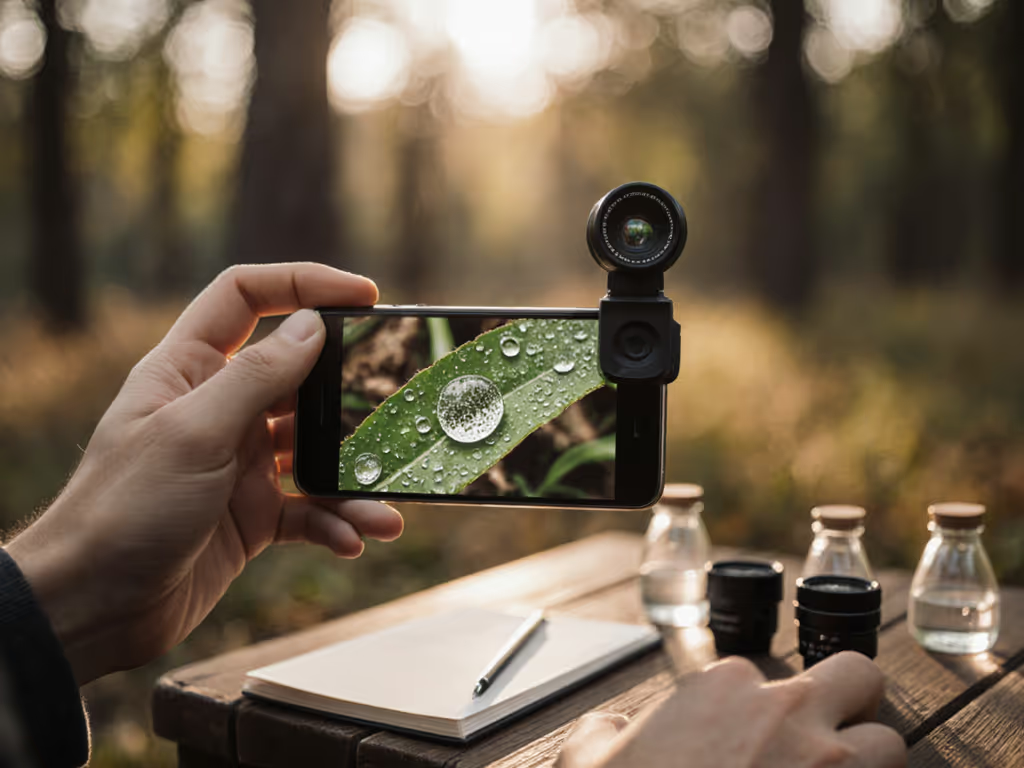
When you’re starting out, portability isn’t just about size, it’s about psychological permission. Lugging heavy equipment deters spontaneous exploration. But when your microscope fits in a backpack or even a large pocket, you’ll actually use it. Think about examining dew drops on spiderwebs at dawn, checking soil samples after rain, or letting kids inspect insect wings during a picnic. These micro-adventures build confidence through small wins, proving that science isn’t confined to labs. For a quick overview of helpful add-ons, see our beginner's accessories guide.
I used to see students freeze up facing towering microscopes with 50 knobs. But hand them a lightweight device with one clear purpose (like "zoom in on this pine needle") and their shoulders relax. That’s the shift we’re chasing: from "Is this thing even working?" to "Whoa, look at that cell structure!" in under five minutes. Your first portable scope should be:
- Forgiving (no laser-level precision needed for focus)
- Instant-on (no 10-minute setup)
- Shareable (easy to show others without crowding)
- Survivable (won’t break if dropped on grass)
Start simple, learn fast. That first wobble-free image of a pollen grain? That’s the spark.
What Most Beginners Actually Need (Spoiler: Not Max Magnification)
Here’s where marketing lies to you: ads scream "2000X!" but beginners rarely need it. At high magnifications, dust looks like monsters, hand tremors blur everything, and lighting becomes a nightmare. If images stay hazy, our microscope maintenance guide covers safe lens cleaning and storage. For 90% of early exploration, plant cells, insect parts, fabric weaves, 40X to 200X is the sweet spot. You’ll get crisp images without the frustration of surgical-steady hands.
Prioritize these over raw power:
- Real-time viewing (a screen beats squinting through an eyepiece)
- Built-in lighting (no hunting for external lamps)
- Battery life (2+ hours for field trips)
- One-handed operation (so you can hold samples steady)
A pocket microscope review worth its salt focuses on usability, not just specs. After testing dozens with new users, I’ve seen how devices that demand complex calibration kill curiosity fast. Conversely, tools that "just work" turn hesitant testers into eager repeat explorers.
Top Field-Ready Picks: Tested for True Beginner Friendliness
SkyBasic RM Wireless: The "Just Grab and Go" Champion
When you need to examine coins, circuit boards, or leaf veins right now, the SkyBasic RM Wireless is your no-fuss ally. Its lightweight handheld design (barely heavier than a TV remote) fits comfortably in one hand, while the wireless connection streams live to your phone or tablet. Using a traditional scope? Pair it with the best phone microscope adapters for the same easy sharing. No cables tangling in grass, no USB ports fumbling, just point, zoom, and see.
Why beginners love it:
- Instant setup: Powers on in 3 seconds
- Forgiving focus: Wide depth-of-field makes blurriness rare
- Kid-safe: No sharp edges or fragile parts
I’ve watched retirees use this to inspect stamps at coffee shops and teens document pond scum for school projects. It’s the definition of a compact microscope value winner, proving you don’t need lab-grade precision for meaningful discovery. At under $100, it’s the microscope I recommend when someone says, "I just want to try this."
Tom Love DM9: Big Screen, Big Confidence Boost
If squinting at phone screens frustrates you (or your eyes), the Tom Love DM9’s 7-inch built-in display is a game-changer. Imagine showing your grandkid a ladybug’s leg without huddling over a tiny screen, it’s collaborative, comfortable, and immediately rewarding.
Standout perks for new users:
- Vibrant IPS screen: Colors stay clear even in daylight
- Adjustable stand: No hand fatigue during longer sessions
- 1080p recording: Save clips to share on family group chats
This model shines for handheld microscope evaluation centered on ease-of-use. One user told me: "I finally felt in control (not like the microscope was fighting me)." For parents or educators, the large screen turns microscopy into a shared "ooh" moment, not a solo struggle.
ioLight Pocket Microscope: The Pocket-Sized Powerhouse
True to its name, ioLight’s foldable design slips into a jeans pocket. Don’t let its size fool you, it handles 100X magnification with crisp clarity, perfect for quick mineral checks on hikes or inspecting fabric weaves at craft stores.
Beginner superpowers:
- No setup: Unfold, press power, done
- Smartphone pairing: Stream to your device via Bluetooth
- Rugged: Survived my "accidental drop test" from a picnic table
This is my top pick for the "I need proof this hobby won’t gather dust" crowd. Its dead-simple operation embodies the field microscopy tools philosophy: curiosity should be mobile, not chained to a desk. A geologist I worked with still uses hers after three years of field trips, no fancy maintenance, just consistent "wows."
Celestron PentaView: The All-Rounder for Growing Skills
Starting simple but itching to grow? The Celestron PentaView bridges beginner and intermediate with its balanced approach. It includes a sturdy carry case (a rarity!), dual LED lighting, and 40X-200X optical magnification with zero software headaches. Heading outdoors often? Compare microscope field cases to protect your setup between sites.
Why it earns trust:
- Progressive learning: Add slides later without new gear
- Carry-and-protect: The included case prevents "oops" moments
- True color accuracy: No weird blue tints that confuse beginners
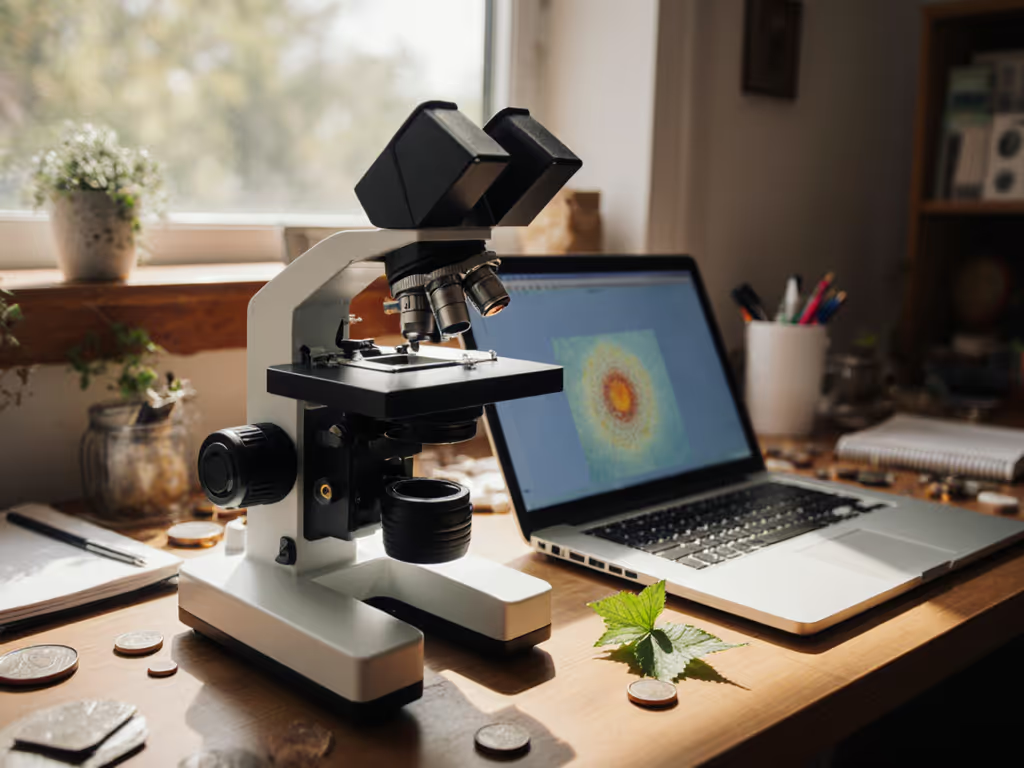
This scope directly tackles the pain point of "Will this become obsolete fast?" One mom wrote: "My kid used it for 4th-grade science fair, and now I’m hooking it to my laptop for textile art." That adaptability is gold for compact microscope value hunters.
Making Your Pick: Skip the Spec Sheet Trap
It’s tempting to compare magnification numbers or megapixels, but for beginners, how it feels to use matters more. Ask yourself:
- "Can I set this up alone in under 2 minutes?"
- "Will I actually carry this on walks?"
- "Does it make sharing discoveries effortless?"
If a scope requires a PhD in setup, skip it. Your goal isn’t technical perfection, it’s that first heart-skipping moment when you see the hidden world clearly. That’s where lasting curiosity lives.
Gentle Starter Tips for Instant Success
Avoid the #1 beginner mistake: rushing the sample. Even the best portable scope shows mud if you slap a leaf under it. Try these scaffolded steps instead:
- Wipe your slide with a microfiber cloth (static repels specimens!)
- Use a drop of water as a free "lens" for translucent items (like petals)
- Start LOW magnification (20X-50X) to find your target
- Adjust lighting slowly (less is often clearer)
I’ve seen tears of frustration turn to grins when users realize blurred images usually mean too much light or too much hand shake. Master these tiny habits first; optics will follow. Dialing in brightness gets easier with our microscope illumination guide.
The Real Win? Building Your Discovery Muscle
Choosing a portable microscope isn’t about specs, it’s about choosing confidence. The right tool turns "I wonder..." into "I discovered..." within days, not months. Remember that nine-year-old with the tardigrade? She didn’t need the priciest gear. Just something accessible, intuitive, and ready when curiosity struck.
Today’s mobile microscope options make repeatable wonder possible for anyone. When your equipment fades into the background, all that’s left is the awe of seeing a snowflake’s architecture or a bee’s pollen basket up close. That’s how small wins grow into tomorrow’s confident discoveries.
Ready to Take Your First Step?
Don’t overthink it. Pick one scope that passes the "would I carry this hiking?" test and use it. Check your local library’s STEM kit program (many lend portable scopes!), or borrow one from a science teacher. Better yet, grab your phone’s macro mode and practice observing today. See how many textures you can spot on a single leaf. That’s the real gateway.
Small wins today grow into tomorrow's confident discoveries. Start simple, learn fast, and let me know what you find.
Related Articles